Friday, February 18, 2022

The Lady of the Lake House - Part 3

 The Lake House

The Lady of the Lake - Part 3


Site of the History Tent, February 26 & 27, 2022


Central Florida pioneer James G. Speer, in 1868, sold the exact acreage fronting Lake Pineloch where today the Lake House of this series sits. William Barber of Orange County was Speer’s buyer, but then, nine months after issuing a deed, the transaction was voided by court order.

Our countdown to Pine Castle Pioneer Days continues with this, Part 3, of the Lake House on Lake Pineloch.


Orlando of 1860 was a straggly cow pasture surrounding a small log courthouse which sat in the center of an imaginary town square four acres in size. There were three or four houses, one being the residence of Postmaster John R. Worthington, whose house doubled as the boarding house whenever a circuit judge came to the county seat to hold court. When court was not in session, which was most of the time, there was little reason for anyone to attempt the arduous journey to the forsaken village of Orlando.


Original Town of Orlando (1857)

Between 1860 and 1868, bad conditions at the village of Orlando worsened. The townsite was, truthfully, auctioned off - on the log cabin courthouse step - in 1867. Fewer people were calling Orlando home than in 1860. Even Attorney James G. Speer had departed Orange County for a new residence in today’s Dunedin, where on December 21, 1868, Speer signed over the Lake Pineloch property to William Barber. Seventeen days after signing it, Speer’s document was recorded by the Clerk of Court at Orlando.

There were no such places as Pine Castle, Edgewood, or Belle Isle in 1868, and the fellow who was to introduce the Pine Castle place name to central Floridians was still residing at Louisville, Kentucky. Few souls ventured south to Orlando, and even fewer dared to venture further south to Fort Gatlin.

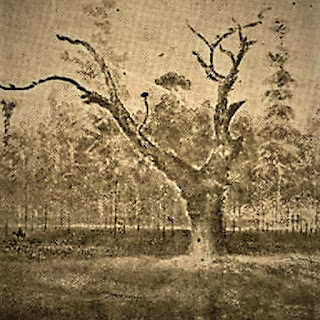
A Lake House on Lake Pineloch did not yet exist in 1868 either, although across the lake stood a huge tree - the Council Oak – itself serving once as a lake house of sort for the Seminole Indians. And while settlers had by this time discovered Lakes Conway and Tohopekaliga, land south of the county seat at Orlando remained predominately unsettled wilderness. Mostly unsettled, that is, but not entirely so. A few of Orange County’s earliest pioneers, including one very special lady, had obviously known something in 1860 that most other settlers did not.

Aaron Jernigan, Benjamin Whitner, Joseph McRobert Baker, and Mrs. James G. Speer had all begun to accumulate acreage along the old forts train – from Lake Monroe south to Fort Gatlin - including land south of Orlando and doing so before the start of the Civil War.

Isaphoenia Cleopatra (Ellington) Speer, first wife of pioneer James G. Speer, had purchased, in 1860, three large parcels along the Fort Mellon to Fort Gatlin trail. She bought 40 acres at Fort Reid, mile marker 2 of the old trail, another 160 acres on Lake Ivanhoe, mile marker 20 of the old trail, and still another 160 acres on Lake Pineloch, mile marker 27 of the trail.


1843 survey of Lake Pineloch (pond).
Note surveyed Fort Mellon Road lower left quarter


War then came to the States and everything in central Florida changed. During the War, a third of Orange County’s young men perished. And whatever wealth might have existed prior to the war, it was wiped out during the war. By War’s end, the most prominent of Orange County’s earliest settlers were gone. Even the Speer’s had taken up residence on the Gulf Coast.

In 1867, where Dunedin, Florida is today, Isaphoenia Cleopatra (Ellington) Speer, the first wife of James G. Speer, both residents of Orange County beginning in 1854, died. She died while still owning our Lake House property – deeded solely in her name.

James G. Speer eventually returned to Orange County, but before doing so, he sold the 160 acres on Lake Pineloch. But Attorney Speer neglected to approve the sale through Probate Court, so in September of 1869, the sale was voided. Rather than Speer correcting the sale to Barber, a new buyer suddenly – an Attorney from New Orleans – snatched up all 160 acres.

William Mayer Randolph was the new buyer, but he did not homestead this property. Instead, Attorney Randolph issued two new deeds, splitting the 160 acres into two halves, deeding one-half to new Orange County resident Francis W. Eppes, and the other to Nicholas P. Trist, a resident of Alexandria, Virginia.

It needs to be pointed out that, in 1869, there were thousands of available acres to homestead, but Attorney William M. Randolph wanted these specific 160 acres that had previously been deeded solely to the first wife of James G. Speer.

Why? What was so special about these 160 acres bordering the west shore of Lake Pineloch in 1869? Could it be the voided transaction and new deed had something to do with Isaphoenia (Ellington) Speer being a great-granddaughter of Martha Eppes?

The answer and more when The Lake House concludes next Friday, February 25, 2022.


The History Tent

Beneath the Giant Oaks

Pine Castle Pioneer Days

February 26 & 27, 2022

Guest speakers each day at 11AM, Noon, 1 PM, 2PM & 3PM

FREE Parking, FREE Admission, FREE Listening!

ALSO; stop by my Cronin Books Booth and say hello!

Thursday, February 10, 2022

The Lake House on Lake Pineloch - Part 2


The Lake House

Historic Lake Pineloch – Part 2


The Council Oak by J. M. Alden (c 1915)


Part 2: The Tree across the Lake

Frances Eppes certainly would have viewed the large Live-Oak while constructing his lakefront residence in 1871, and maybe even visited it, although he made no mention of The Council Oak of Fort Gatlin as far as is known. But a later occupant of the Eppes home however went as far as painting the tree - the sole visual evidence that the Council Oak did in fact exist.

James M. Alden was the “talented artist” identified in 1915 by Anna Louise (Caldwell) Whitner as the person who painted the then dying tree. She also included a photo of Alden’s painting with a written history telling of how the tree had been a meeting place for Seminole Indians. The tree, Anna said, was dead when James M. Alden painted it.

The Council Oak, likely the last painting by James M. Alden, certainly had not been his first. Another painting by Alden was of a historic residence at F Street and 15th Ave. in Washington, DC. James M. Alden painted that home in 1874, and a copy of that painting graces the cover of, Citrusland, DC: District of Columbians of Florida’s Citrus Belt, by yours truly. The home was described as the residence of the architect of our nation’s White House, but even that painting had not been the first for an artist known as the “Yankee Artist of the Pacific Coast.”


James M. Alden, Yankee Artist of the Pacific Coast

After traveling the Pacific Northwest as a young Naval Officer between 1857-1860, painting such amazing sights as Yosemite Falls, and after service in the Civil War, James M. Alden then spent the next 25 years as Secretary to Admiral Porter at Washington, DC.

A Widower when he retired in 1890, Alden married Frances Hewlett, a retired “DC Clerk”.

Miss Frances Hewlett was already an Orange County landowner when she married James M, Alden in 1890. She had followed the lead of other “DC Clerks” by investing in grove land as early as 1884. After her marriage to Alden, she came to Florida to select their retirement home, and chose the historic Francis W. Eppes residence on Lake Pineloch.

The house had changed hands a few times after the death of Eppes in 1881, so it is unclear if Frances was aware of the historic nature of the home she acquired, but in her purchasing this specific residence, Frances had in fact preserved the home that Francis had built.


Author and historian Kena Fries, daughter of Orange County surveyor John O. Fries, wrote Orlando in the Long, Long Ago in 1938. In her book she told of visiting the J. M. Alden home in 1904. She also wrote of the Council Oak, generally believed by historians to have been on the east side of Lake Pineloch. Kena’s account however, despite offering a wealth of information, gave a different location for the tree.

“On the west side of Pine Loch Lake, where the old trail wound its way thru the pine woods, there once stood an immense live oak, said in its glory to have been the largest live oak in all of central Florida. It was known as “Council Oak”, the gathering place of the Seminole warriors. Here it is stated on what seems to be reliable authority, was planned the Dade Massacre and many other sudden attacks on the early settlers.” The “old trail” was indeed on the west side of the lake, but the Council Oak is believed to have been on the east side of the lake.


Council Oak tree bark collected by Kena Fries

Kena went on to explain that the tree had been struck by lightning. “In September 1904,” said Kena, while spending the day with the late J. M. Aldens we rowed across the lake. (If the tree had in fact been on the west side of the lake, Kena would not have had to row “across” to see the tree). While visiting the dead standing tree in 1904 (about the same time Alden painted the tree), Kena Fries “picked up a chip (bark) with the most peculiar markings and shape, closely resembling a watch dog.” She included a photo of the Council Oak’s bark in her book.

Continued below:

Pine Castle Pioneer Days 

The History Tent

Sponsored by Pine Castle Historical Society

Pine Castle Pioneer Days

Cypress Grove Park, 290 W. Holden Ave.

Orlando, Florida

See Part One for Saturday Schedule of Speakers

Sunday, February 27, 2022 Schedule of Guest Speakers

11:00 AM Railroads shaped YOUR Central Florida

by Richard Lee Cronin

Noon Jernigan’s, Patrick’s & early Orange County History by A. Stephen Patrick

1:00 Florida’s World War II Heroes, by Tom Tart

2:00 A Turbulent Decade: Civil War & Reconstruction in Central Florida by Jeff Hooper

3:00 Pine Castle: Today & Tomorrow,

A Panel discussion led by Larry Miles

Each topic will begin promptly at the appointed hour

See Part One for Saturday Schedule of Speakers


Continued from above:


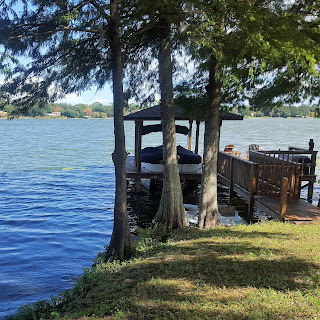
Pine Castle Pioneer Days is all about celebrating central Florida’s heritage, a history closely tied to Fort Gatlin, the Council Oak, and arguably the Eppes – Alden home - the most historic residence in all Central Florida, a Lake house begun in 1871 by Francis W. Eppes.


Kena Fries had come to America as a young girl with her mother, arriving on the Orlando in the late 1870s, coming to Orlando to join her father. John O. Fries who was already working as an Orange County land surveyor.

John Otto Fries had first laid eyes on the village of Orlando on Christmas Day 1871, the year the grandson of President Thomas Jefferson was building a home several miles further south.

Francis Eppes, as far as we know, built the first house on Lake Pineloch, but he was not the first property owner of the acreage upon which he built his house. Eleven years before Eppes started construction of his home, a deed was issued to a remarkable central Florida frontierswoman, a fascinating woman I refer to as, Lady Isaphoenia.

Next Friday, our countdown to Pioneer Days continues with Part 3: The Lady of Lake Pineloch.

Mark your calendar for Pioneer Days

Pioneer Days, February 26 & 27, 2022

Stop by my Central Florida History Booth

Richard Lee Cronin, Author & Historian

www.CroninBooks.com


Thursday, February 3, 2022

The Lake House on Historic Lake Pineloch


The Lake House

Historic Lake Pineloch


The house Francis built

A convincing argument can indeed be made that a lake house in South Orange County is in fact the area’s most significant historical site. One need not take my word for it though, as I intend to lay out facts to argue such a claim in this blog. The lake house has long been known as the home Francis W. Eppes built, but the history of this parcel prior to and after Eppes, in my opinion, will be insightful news to every fan of central Florida history.

Francis Eppes was not the first owner of the land when he built his home in 1871. In fact, Eppes did not even own the land upon which he built his house. Eppes arrived in central Florida a poor man. He had lost all his wealth during the Civil War. Relocating his family from Tallahassee, he came with Will Wallace Harney, William Mayer Randolph, and Ouachita Pushmataha Preston, each desiring to settle in central Florida near the abandoned Indian War fortress named Gatlin. Remnants of the old fortress were still visible when this clan first arrived in 1869.

Good reasons for celebrating Pioneer Days!

As grandson of President Thomas Jefferson, the Orange County, Florida home Francis Wayles Eppes, built on 80 acres on the west shore of Lake Pineloch, has for decades been associated with the Jefferson’s Monticello, which in turn associated the residence with our Nation’s Capital at Washington, DC. But as a homestead, this exact parcel, half of 160 acres, is likewise linked with President George Washington. And as a later “existing home sale”, the house Francis built reconnected Lake Pineloch with Fort Gatlin history during the Indian War as well as our Nation’s Capital once again.

For the above reasons, and then some, the house Francis built - and the land upon which he built his house, makes the Lake House and property the most historic location in all central Florida.    

A notable residence indeed

Two babies, born four weeks apart in 1801 at Thomas Jefferson’s Monticello in Virginia, were to eventually grow apart as adults. A baby boy and baby girl, the two grew up at Monticello. They even attended each other’s wedding at the historic Monticello estate. The girl, Virginia Jefferson Randolph, married Nicholas Philip Trist, the private secretary of Thomas Jefferson. The boy, Francis Wayles Eppes, the son of Jefferson’s youngest daughter, married Mary Cleland Randolph.

Pine Castle Historical Society is once again sponsoring 

The History Tent

Pine Castle Pioneer Days

Saturday & Sunday, February 26 & 27, 11 AM to 3 PM

July 4, 1826, forever changed the lives of Francis W. Eppes and Virginia Randolph Trist. As our nation celebrated the 50th Anniversary of the Declaration of Independence, Thomas Jefferson, a signer of that historic document, died at his Monticello estate. Francis W. Eppes and Nichols P. Trist, after teaming up to close out the financial troubled estate, each went their separate ways. Nicholas P. Trist settled at Alexandria, Virginia and joined the State Department. Francis W. Eppes followed his in-laws, the Randolph’s, south to Tallahassee in the Florida Territory.

Eppes and Trist each built a new life, each somewhat successful until the Civil War, when both found themselves on the wrong side of history. Each was on the brink of financial collapse. Nicholas P. Trist was still residing with his wife Virginia at Alexandria, Virginia. Francis W. Eppes, at the center of war-torn Tallahassee, found himself bankrupt.

Continues below.

The History Tent

Sponsored by Pine Castle Historical Society

Pine Castle Pioneer Days, Cypress Grove Park 

290 W. Holden Ave, Orlando, Florida

Schedule for Saturday, February 26, 2022


11:00 AM Secrets of The Rutland Mule Matter, by Richard Lee Cronin

Noon What is Pine Castle? By Larry Miles

1:00 The Incomparable Alexander St. Clair-Abrams by Bob Grenier

2:00 My Sanford, Florida familyby Dean Berrien

3:00 Today’s Pine Castle looks toward Tomorrow

A Panel discussion led by Larry Miles

Each topic will begin promptly at the appointed hour

Free Admission, Free Parking, Free Listening

Continued from above.

At Tallahassee, in 1868, a Louisiana Attorney named William M. Randolph planted the seed of change for his family members. He purchased a parcel of land in far off Orange County, acreage which served as the final stretch of a three-decade historic trail which led to the front door of an abandoned fortress. Family members from Texas, Kentucky, Louisiana, and Florida’s Panhandle, then followed his lead, packing up their belongings to head toward a land they had ever seen before.

Following a dirt trail 28 miles long from the steamboat landing on Lake Monroe, the final stretch of land crossed land acquired by William Mayer Randolph, but before reaching Randolph’s property, just to the north, the trail also crossed a homestead of 160 acres which had only recently been sold.

Pine Castle Pioneer Days, February 26 & 27, 2022

The owner of the 160 acres had died in 1867, and her husband was attempting to sell the entire parcel. A signed sales deed however was suddenly voided, and all 160 acres became the property, in 1869, of Attorney William Mayer Randolph.

The new property owner did not keep the land for himself though. Instead, William M. Randolph gave permission to Francis W. Eppes to build on one-half, or 80 acres, and he deeded the other half, the other 80 acres, to “Nicholas P. Trist, of Alexandria, Virginia”. Randolph left a hand written note saying that Eppes could pay him whenever he was able.

The historic Lake House on Lake Pineloch, begun 151 years ago, still exists today. The home is truly a monument to early settlers of the Fort Gatlin region, but the residence is only part of an amazing story of the land upon which the house was built.


Central Florida Council for Florida House, January 31, 2022

I had the distinct honor recently of speaking to the membership of the Central Florida Council for Florida House. A wonderful organization, this group is part of a statewide organization that maintains Florida House on Capitol Hill, the only State Embassy in Washington, DC. My talk was entitled, Citrusland, DC, and at their meeting I introduced my latest mini book of the same name, Volume 3 in a series, Righting Florida History.

The cover of this latest book features a portion of an 1874 painting of a Washington, DC residence. The painting also has a historic connection with the single-most historic parcel in all of central Florida. That story, and more, as this series continues next Friday, February 11th.

Part 2, A Tree across the Lake

Stop by Cronin Books booth at Pioneer Days

And let's talk central Florida history


SPECIAL EVENT PRICE $10.00

Citrusland, DC by Richard Lee Cronin


Friday, December 31, 2021

A CitrusLAND Happy New Year Blog


Mr. Brittain Goes to Washington


1910 Tavares & Gulf Railroad photo above courtesy Florida Memory

A CitrusLAND 2022 Happy New Year Blog

By Richard Lee Cronin


Happy New Year!

My New Year’s Resolution for 2022 is to continue writing about intriguing Central Floridians, and so, I might as well get started now by telling of Walter M. Brittain of Washington, DC, a gentleman having connections with Orlando, Lake County, and the Tavares & Gulf Railroad.

Fans of local history and railroad history, I believe, will find Walter Brittain quite fascinating, for he is characteristic of many of this region’s earliest forerunners. An Orlando land developer and Clermont railroad executive, Brittain came south to Florida in the early 1900s with all the right intentions. But like many who came before and after him, Walter Myron Brittain soon vanished. Brittain’s first central Florida job title was Vice President & General Manager of Tavares & Gulf Railroad, but like that of his T&G predecessor, he lived in downtown Orlando – 30 miles east of Clermont, the railroad’s base of operations at that time.

Before detailing Walter’s local involvement, I should first mention why I chose him to headline this ‘Happy New Year’ blog. Walter Brittain and I, it turns out, happen to share a job title. I am honored to begin serving today as Vice President of Education & Public Relations for Central Florida Railroad Historical Society, parent organization of central Florida’s premier museum, the Central Florida Railroad Museum at Winter Garden.

My new position with the museum fits perfectly with what I enjoy doing most – researching and writing about how the earliest days of central Florida’s history corresponds with America’s remarkable history.

One case in point? Walter M. Brittain!


I have been researching and preparing for a presentation on January 31st to the Central Florida Council for Florida House. Long fascinated by the little-known roles District of Columbians had played in the 1870s and 1880s in developing Florida’s Citrus Belt, I decided my talk would be about many of those noteworthy individuals. By the way, were you aware that our State of Florida is the only State to have an Embassy at Washington, DC?

The invite to speak to this outstanding organization, I decided, was a perfect opportunity to talk, for the first time ever, about CitrusLAND, DC. 


 Having completed my CitrusLAND, DC presentation, I returned to researching the history of the Tavares & Gulf Railroad. Central Florida History Museum historian Phil Cross had provided me his extensive research on the railroad, notes which included mention of an Order issued to the T&G by the Florida Railroad Commission (FRC). The Order, dated October 17, 1908, reported the following: “W. M. Brittain, vice president and general manager, had appeared before the Commission on behalf of the Tavares & Gulf Railroad. Thereupon, after due consideration, it is declared and adjudged that the physical condition of the line of the railway of the Tavares & Gulf Railroad is not reasonably safe for the passage of trains over it at a reasonable rate of speed, and it is necessary for the safety of persons and property conveyed over the said railroad that the company at once proceed to improve its physical condition”.


Become a member of the CFRR! Email me for details!


Now then, back to that FRC Order. The T&G Railroad failed to meet conditions as set out by the 1908 order, but the reason for not complying was likely not due to insubordination by Brittain. The unstable financial situation of the railroad was more likely the cause. Walter M. Brittain was still the Vice President & General Manager in 1910, but by 1912, he and the railroad had parted ways. Brittain, as did most every central Floridian of that time, tried his luck as a land developer.

Charles A. Carpenter, also a resident of Orlando, assumed management of the T&G in 1912.


Walter Myron Brittain, born May 23,1878 at Washington DC, died 12 December 1944 at DC. A graduate of Georgetown University, Walter Brittain first worked for a DC steam railroad, but by 1903 was working at Richmond, VA, employed with the Seaboard Air Line Railroad. That same year, the head of the T&G Railroad at Orlando, Florida died, so W. M. Brittain came south to central Florida to fill that vacancy.

While living at Orlando, Walter M. Brittain, in addition to managing the T&G, partnered with well-known Orlandoan Samuel Y. Way. The two developed residential lots at Lake Leora, the body of water described in my book, Orlando Lakes: Homesteaders & Namesakes, as Park Lake today, off East Colonial Drive.

Brittain & Way Real Estate Company was located, in 1912, at 13 S. Orange Avenue. Walter, and wife, Ethel Florence (Thompson), lived at the Brittain & Way development, but their specific parcel has since made way for widening of Colonial Drive.


Walter left Central Florida to accept a position with the Pennsylvania Railroad at Pittsburgh, PA. He eventually returned to Washington, DC, where in 1944, while working as an employee of the Federal Housing Administration, Walter Myron Brittain died at the age of 66.

Brittain’s story as it pertains to central Florida history is not at all unusual. Many a venturesome sole migrated from the North hoping to make a difference, only to find challenges which seemed insurmountable – encounters which then sent them packing.


As early as 1873, correspondent Will Wallace Harney of Pine Castle told of the one ingredient each and every newcomer to Central Florida needed most: “Without pluck and courage,” Harney wrote shortly after his own arrival at Orange County, “he cannot live in Florida”. I would argue though that it took more than mere courage for those who came to this land during the first hundred years after Statehood.

One had to be resolute that, no matter how often fate knocked them down, as it did so often, our central Floridian forefathers and foremothers needed the endurance to get back up on their feet and prepare to face the next insurmountable challenge head on.

 Visit my website at www.croninbooks.com for Central Florida history.

HAPPY NEW YEAR!

Sunday, December 12, 2021

1845: The Speer family & the St. Johns River


Holiday Post - Part 3:


The Speer family & the St. Johns River of 1845


Algernon Speer and father-in-law Arthur Ginn are well-known to fans of central Florida history. They are remembered as the earliest settlers of Mellonville - Fort Reid, along the south shore of Lake Monroe, or Sanford as most know it today. But what about Algernon’s brother, Alexander Speer, of Culloden, GA?

A February 1845 letter to the editor of 1845 sheds new light on a third Speer family member in the origins of central Florida. Published March 13, 1845, in the Southern Reporter, Alexander, it turns out, was also well acquainted with a newly christened Orange County. Florida Territory became the 27th State in 1845. A Second Indian War had ended three years prior, and surveyors were busy at work that year mapping Florida south of Lake George. Surveys were needed so homestead applications could commence.

Mosquito County became Orange County as of 1845, and Orange still had oceanfront property that year. Volusia County was not formed until 1854. But few individuals knew about Orange County, and only a handful of settlers, as we learn from Alexander Speer, had dared to call the wilderness south of Lake Monroe their home.

Having explored the land below Lake Monroe by early 1845, Alexander Speer provided an eye-witness account of his travels into central Florida. His analysis below is unedited except for an occasional (sic) to indicate a different spelling than is used today.

Augusta, Ga., 1st Feb. 1845,

South Florida

“Messrs. Editors: In reply to numerous inquiries from various parts of the State, permit me to trouble you with one more letter on South Florida. The inquiries are so numerous, that I hardly know how to reply without being tedious. However, I will condense what I have to say as much as possible.

“First. There are two routes to Florida, one by railroad to Savannah, and thence by weekly steamboats to Lake Monroe, 225 miles up the St. Johns. This route, from Macon, going and returning, will cost about 50 dollars.

“From Savannah to Lake Monroe, will take about four days; and the traveler would do well to lay in his stores at Savannah, on which to subsist while exploring the country. In going this route, the voyager will see a most magnificent river in the St. Johns. It varies from 1 to 3 miles wide up to Lake George, a distance of 140 miles. Lake George is 12 miles wide and 20 long, and beautiful as the vision of fancy. Here the tide stops, and the river from this place is from 200 to 400 yards wide, and very deep; and from this lake up is called the “Upper St. Johns.”


“The lakes are in the following order, as you ascend: Little Lake George, Lake George, Spring Garden Lake, Lake Berisford (sic), Lake Monroe, Lake Jessup (sic), Lake Pointsett (sic), Lake Hainey (sic), Lake Winder (sic), and Lake Washington; and beyond this, the river is unexplored.

“Lake Washington is very large and is perhaps about 100 miles higher than Lake Monroe. Lake Jessup (sic) was the ne plus ultra of my peregrinating and is about 250 miles by water from the mouth of the river.

“During the war, large steamboats ascended the river about 46 miles beyond Lake Monroe, and it is unknown how much farther they can go. The objections to the traveler taking this route, are, that it is expensive, and he will hardly be able to get horses to explore the country when he gets there.

“A public house is kept by Major Taylor at Enterprise, on the east (sic) side of Lake Monroe. From this lake to Smyrna on the Atlantic coast, is 18 miles, and to Tampa, on the Gulf, is about 70 miles; the Lake lying nearly between them. Further up the river, say 70 to 80 miles, it approaches so near the Atlantic, that, from the river you can hear the roaring of the surf as the waves roll in on the shore – and here the river is said to be 60 or 80 feet higher than the sea; and it is asserted that a canal of six miles long would connect that part of the river with the sea, and this is already contemplated by the settlers of Indian River.


“The better plan to explore the country is to go by land. Any one can look at a map and see the course. From where I reside, the way would be through Lowndes County and thence to Fort King. Here the settlements cease, and for about 80 miles you have the wilderness, to Lake Monroe. There are roads, however, or trails, and no difficulty to get on by taking some stores with you. On this route you may see Orange Lake, then Lake Eustace (sic), and Lake Opopka (sic), then Fort Gatlin, where three families reside, then turn east (sic) 25 miles to Lake Monroe and Lake Jessup (sic), where several families reside.

“I am asked if the country is healthy? How about musketoes (sic)? And what about the water?

“1st. As to health, I would be very willing to live there. I think is healthy. My reasons are these; the great mass of the country is poor sand pine land, or sandy oak scrubs. The branches, creeks, rivers and lakes, have sandy shores and sandy bottoms, and there is very little wet land, notwithstanding the authority of Murray’s Encyclopedia of Geography, which asserts that it is all swamp, and produces forty bushels of frogs to the acre.

“2. The climate is mild and delightful – ne extreme cold or heat – a slight frost indicates the greatest cold, and heat scarcely ever reaches 90 degrees. Here in Georgia, we have it up to 95, and in the upper valley of the Mississippi, according to the notes of an officer of the army, it ranges from 105 to 115. In Cuba 84 is the greatest heat.  The reason is, these warmer regions are continually fanned by sea breezes, moderating the heat of the sun, producing a bracing and exhilarating effect on the feelings, and preventing that lassitude which is so often the precursor of fever.

“3. The settlers after trying the country for several years, say it is healthy; and I, from the face of the country, see no reason to doubt their word. But let man judge for himself and act accordingly.

Next in order come the musketoes (sic). The editor of the Democrat, in Columbus, manifests some alarm on this subject. I was amused at his fears. What? A man living in Columbus afraid of musketoes! (sic) It is too bad. This insect is not a stranger in Georgia. Hot weather and standing water will bring them forth anywhere. They swarm on the lakes of Canada; they filled the woods in the settling of Kentucky. Go near the rivers and you will find them – go back into the pine lands and there are none. As it is here, so it is in Florida. I saw none when there, but no doubt about the rivers, there are a plenty in summer. I was told there were none in the pine lands off from the river.

As to water, I think it about such as we get in the pine lands of Georgia. Some better and some worse. Neither the river nor lakes are good, though those who are accustomed to them think differently. The small creeks and branches tasted very pleasantly. So also the wells and springs, as far as I saw. What is called sand hill water is as good there as in Georgia. It is true, however, that there is no such water to be found in Florida as is seen gushing from rocks and mountains, and an up-country man would no doubt for a time complain of the water, but this passes away in a few weeks, and he feels it no more.

From Culloden, I think it about 400 miles to Lake Monroe by land; and by water, via Savannah, it is about 800. I beg leave to remark, that I am persuading no one to go to Florida. I have no interest involved, and no motive to make a misstatement, and have not done so knowingly. I intended an act of kindness when I published my letter, and nothing more. Let all judge and act for themselves. I selected a spot on Lake Jessup (sic) to which I desire to move, but whether I shall ever get there is another question; time will determine.

ALEXANDER SPEER.”

End of Speer's letter to the Editor.

Happy Holidays from

Richard Lee Cronin, Author & Historian

CroninBooks.com


GIFT HISTORY THIS HOLIDAY SEASON! 


Sunday, December 5, 2021

First Steamboat on Lake Monroe

 Holiday Post Part 2 

‘Essayons’ Lakes Monroe


Cruger & DePeyster Sugar Mill Ruins, courtesy Florida Memory Project

A year following steamboat Florida entering Lake George in May 1834 (Part 1), the December 1835 Dade Massacre, during which 108 soldiers were killed, combined with a total of 16 plantations burned on Christmas Day of 1835, resulted in a buildup of troops to defend the Florida Territory. Burning of the plantations at New Smyrna and Spring Garden, including the Cruger & DePeyster Sugar Mill as the ruins of which is shown above, brought troops up the St. Johns River. A United States territory then, it was to be another decade before Florida was to become a State.

Chapter One of my CitrusLAND: Curse of Florida’s Paradise quotes from the personal memoirs of frontierswoman Jane Murray of New Smyrna. Jane describes her home being attacked and burned by Indians, and of how, alone with her small children, she managed to escape as her home burned to the ground. Georgia newspapers of January 1836 reported accounts of an attack on nearby Spring Garden too, and of troops boarding the streamer John Stoney in route to the St. Johns River.


Central Florida history by Richard Lee Cronin

www.CroninBooks.com

As troops began positioning, General Winfield Scott arrived at Volusia landing, south of Lake George on the St. Johns River. “Finding there the United States steamer Essayons, I embarked in her and with a guard of only seventeen men determined to penetrate, by the St. Johns, the southern part of the peninsular as far as practicable.” General Scott stated the reason for the expedition was to chart the course and depth of the river, and said that he found, “no difficulty in passing up to the head of Lake Monroe and might have carried that at point a draft of eight or nine feet of water.”

1840s survey of Lake Monroe and St. Johns River east of todays Sanford


Dates stated above are especially noteworthy in putting the legend of Orlando Reeves to the test. Supposedly killed by Indians near Lake Eola in September 1835. Reeves, according to a tablet attached to a rock at Lake Eola, was on night duty when attacked. Orlando and much of Orange County however was at that time Indian territory. According to General Scott’s published report of May 1836, the Army had not yet commenced land exploratory missions prior to May 1836, nor did such a campaign commence until after Fort Monroe had been established in December 1836.


The Orlando Reeves fable lives on because of a rock at Lake Eola
First Road to Orlando, by Richard Lee Cronin, exposes the truth!


General Scott had determined that they had sailed 200 miles south via river from Volusia landing, commenting that he thought they could have gone another fifty or sixty miles south towards Cape Florida had they been able to cross the bar. The “bar” mentioned by Scott was likely where the river flowed from Lake Jesup, just beyond present day Sanford. The General added, “such point, we found about eight miles below Lake Monroe, on the east bank. A leading trail passes through it”. The “trail” was likely the trailhead where Camp Monroe would soon to established, this trail being the north end of what in 1838 became the Fort Mellon to Fort Gatlin Trail, aka, by 1856, The First Road to Orlando.


185 years ago this month, in December 1836, Army troops established Camp Monroe on Lake Monroe. A pier was built extending out into Lake Monroe for offloading soldiers and supplies, and soldiers spent Christmas of 1836 guarding a lonely wilderness outpost far from home. Two months later, in February 1837, their fortress was attacked by Indians and, as a battle ensued, Captain Charles Mellon was killed.

President James Monroe, father of the Monroe Doctrine, a proclamation to European Powers that there would be no further colonization of Latin America, had died July 4, 1831. Lake Valdez as the “Second Lake” on the St. Johns River had been named prior to the United States taking possession of the Florida Territory, was changed to Lake Monroe in honor of the 5th President – the third to have died on the Anniversary of our Nation’s Independence. Camp Monroe, in 1837, was renamed Fort Mellon in honor of Captain Charles Mellon. Troops then began preparations for an exploratory journey of 28 miles due south – deep into an unknown wilderness.

As troops marched south in the direction of Lake Tohopekaliga, they paused to established a supply post after about a day's journey - naming that post Fort Maitland. The post was named in honor of William Seton Maitland, a fellow soldier who had died of injuries at the Battle of Wahoo Swamp.

The march continued south until they reached a position to establish yet another fortress, naming that post Fort Gatlin in honor of Dr. Gatlin, a casualty of the 1835 Dade Massacre. Both fortresses were established in 1838 - and yet neither was named for Orlando Reeves - primarily because there was no such soldier.     

Our holiday series blog will continue.

HAPPY HOLIDAYS FROM

RICHARD LEE CRONIN, and

CRONINBOOKS.COM