Sunday, March 6, 2022

Women's History Month - Day 6


Frontierswomen of Central Florida


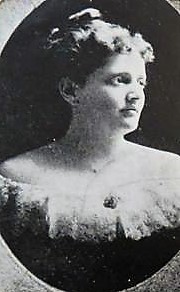
Gertrude DuPuy Sanford and her mother

A Women’s History Month Tribute

By Richard Lee Cronin, CroninBooks.com

6 March 2022

Day 6

CitrusLAND is observing Women’s History Month by honoring extraordinary central Florida frontierswomen. And as we celebrate Women’s History Month throughout March, we are also promoting each day a local History Museum, listing their days and hours of operation.

Our Featured History Museum is at the end of this blog


Laura Jane #Delano Gibbs (1837-1925) was the first owner of a parcel known today as Cranes Roost, a popular Altamonte Springs Park. Although not part of the original town of Altamonte Springs, the origins of this Seminole County city today can be traced to the lady who first owned Cranes Roost, a woman by the name of Laura Jane (Delano) Gibbs.

Mrs. Gibbs owned 158 acres in what was in Orange County back in 1877, property that included the west half of Cranes Roost Lake. Altamonte Springs did not yet exist then, although there was a start-up town called Altamont (no ‘e’) about a mile north of the “Gibbs Homestead.” Altamont Post Office, opened 30 December 1874, was located about where Hwy 434 now passes under I-4. In 1877, the Laura Gibbs parcel was already known as “Gibbs Grove”.

Not until 1882 did “Boston Capitalists” arrive on the scene to begin development of Altamonte Springs, a community east of Gibbs Grove. Laura, a resident of Newton, Massachusetts, sold ten of her 158 acres on 7 November 1877, describing the land sale as, “Gibbs Grove, situated in Altamont, Orange County, Florida.” The buyers were three investors from Bangor, Maine.

Born at Baltimore, Maryland on 11 November 1836, Laura Jane Delano was the fourth child of Henry D. Delano (1798-1888), a “Master Mariner,” and second wife, Laura Allen (1803-1886). Laura Delano was raised near Plymouth Rock, and at age 20, married Oliver C. Gibbs, a native of Massachusetts.

By 1870, Oliver & Laura Gibbs were living at Newton, Massachusetts, outside Boston, where Oliver was a merchant. He continued as a merchant until his death, March 14, 1875, a pivotal moment for the origins of Florida’s town of Altamonte Springs. During the summer of 1875, three individuals were appointed by the Judge of Probate to appraise the estate of Oliver C. Gibbs. The three selected were Josiah B. Chase; Stiles Frost; and George Frost. George was an older brother of Stiles, and this George Frost was also one of the “Boston Capitalists” to establish Altamonte Springs, Florida in 1883.


Cranes Roost, Orange County, Florida, circa 1890 Orange County map


[Further reading, CitrusLAND: Altamonte Springs of Florida, and Rick’s Blog of February 28, 2019].


Dr. Susan #Downer Short and daughter Josephine are featured in my book, Mount Dora: The Lure. The Founding. The Founders. The following excerpt is borrowed from page 194 of that book:

Chosen Days in Scotland arrived on bookshelves nationwide during 1911, no doubt written, at least in part, while author Josephine Short gazed upon Lake Dora for literary inspiration. Author Josephine Short lived with her mother, a distinguished New York physician who, after retiring from her medical practice, became a Lake County resident and land developer.

Dr. Susan D. Short and her daughter Josephine lived on Seminole Avenue, a Mount Dora roadway known today as Ninth Avenue. Their home, at the southeast corner of Helen and Ninth, has since been replaced, but back in its day, the residence overlooked Coliseum Way and came complete with an unobstructed view of Lake Dora.

In 1910, Josephine and her mother, Dr. Susan (Downer) Short were Mount Dora family #162 in the census. John Donnelly and the grandchildren of Annie (McDonald), his deceased wife, was listed as family #163. Dr. Short, at age 75, purchased nearly three city blocks of Mount Dora (see red outlined area below), allocating part for a residence plus a portion for a town “plat of Mrs. S. D. Short’s Subdivision.” Susan Short named her subdivision, Mt. Dora Highlands.”


“Mrs. S. D. Short’s Subdivision at Mount Dora outlined above in red

Bowman Realty, in 1914, was hired as sales agent for “Mt. Dora Highlands,” a tract east of Helen Street, south of Tavares Road (Eleventh Avenue), and west of Donnelly Street. The plat included all of Blocks 20 and 21, plus a portion of Blocks 29 & 30, town blocks first laid out as part of the 1881 Village of Glencoe – aka – Mount Dora. But “Mt. Dora Highlands” had not been the doctors first Lake County development. Dr. Short first subdivided a parcel “close to the Ocklawaha Hotel,” in historic downtown Eustis, Florida. St. Mary of the Lakes Church at Eustis occupies today much of the town block first platted in the 1880s by “Dr. S. D. Short.”


St. Mary of the Lakes Church, Block 122, Eustis, FL, Platted 1903 by Dr. S. D. Short


A graduate of Boston University, Dr. Susan (Downer) Short (1834-1926) was a native of Vermont. Her daughter Josephine (1866-1927) was born in Illinois.

[Further reading: Mount Dora: The Lure. The Founding. The Founders by Richard Lee Cronin].


Gertrude #Dupuy was born at Philadelphia in 1841. Living in Paris with her Widowed aunt at age 23, Gertrude met and married Henry S. Sanford. Henry, a United States diplomatic in 1864, retired five years later, and a year after retiring, found his way back to the States and to Central Florida. Henry Sanford invested a sizeable sum of money to acquire 12,000 wilderness acres on the south shore of Lake Monroe.

Inland three miles from his planned lakeside town of Sanford, he reportedly developed an estate known as Belair. “I sometimes feel the 18th day of December at Belair was a delicious dream,” wrote a journalist who visited General Sanford’s estate in 1882. The reporter added, “having dismounted at the rustic Belair Station, on the South Florida Railroad line, carriages transported our party through a broad gateway into a shady avenue. The pure fresh air is ambrosial.”

Ten rail minutes south of Sanford, Belair was the first stop on South Florida Railroad’s 1880 train to Orlando. “The grove and residence of H. S. Sanford,” wrote another reporter in 1889, viewing Sanford’s estate from his train, “had Crystal Lake on one side and Belair Station on the other. On 145 acres were all the principal varieties of oranges grown in Florida.”

Early write-ups reference Belair as dating to 1870, but during 1875 and 1876, Henry Sanford and wife Gertrude were signing deeds for land sales as, “residents of Jacksonville, Duval County, FL.” Belair was part of the 12,000 acres included in Sanford’s 1870 purchase, but an 1878 deed raises an interesting question as to who really owned the Belair Estate.

An early Orange County deed include the following wording: “Reverend Charles Du Puy, of the City of Philadelphia, PA, did give and bequeath to Gertrude E. Sanford, his niece, certain property, real and personal.” This parcel was transferred to Gertrude in 1878 in exchange for $18,000 and was described as 400 acres “known as Belair, bounded on the south by Crystal Lake.”

Since Belair had been part of the 12,000 acres Sanford purchased in 1870 for $18,200, why did Reverend DuPuy bequeath 400 of the 12,000 acres in 1878 to Gertrude Sanford for $18,000?


Reverend Charles Meredith Du Puy, a brother of Gertrude’s father, died November 26, 1875, at Philadelphia. At the time of the Reverend’s death, Belair, at Sanford, Florida, in fact belonged to a member of the Gertrude (DuPuy) Sanford family. It appears likely that Henry Sanford bought the 12,000 acres by borrowing at least some of the money from Gertrude’s family.

But Gertrude’s family not only assisted Henry in buying the land her family likely assisted in naming Belair too. As Henry Sanford was buying the Levy Grant in 1870, Gertrude’s brother, also a Charles Meredith Du Puy, was President of a railroad venture constructing a line between New York and Philadelphia.


Gertrude (DuPuy) Sanford

The DuPuy family of Philadelphia predates William Penn by five years, that according to a detailed history of the family. “DuPuy’s Rock,” says that history, appears on early Philadelphia maps, while nearby was Bellaire Manor, “a building known by all variations of Bell Air,” as stated in the building’s historic preservation records, dating to the early 1700s. So, the DuPuy family had long been associated with the name Belair.

Henry S. Sanford is remembered as founder and developer of Sanford, Florida, but as is often the case with Central Florida history, a frontierswoman is nearly always involved as well. Presently the County Seat of Seminole County, Sanford, it appears, truly owes its existence not only to Henry Shelton Sanford, but to his lovely wife, Gertrude Ellen (Du Puy) (1841-1902) as well.


Mary #Dyer MacDonald was the rarely mentioned influence behind land agent and marketeer of the 1880s Great Lake Region of Orange County, John A. MacDonald. As husband and wife, they founded Eustis, after first enticing Augustus Pendry to build the Ocklawaha Hotel, and there is considerable reason to state that Mary MacDonald greatly influenced the founding of Mount Dora as well.

John A. MacDonald, a Civil Engineer and surveyor, arrived at Fort Reid from Wisconsin in 1867, coming to the wilderness of central Florida in search of a means of making money so he could bring his wife and son to Florida as well. Assisting others who wanted to acquire land in Orange County was the career he chose, and by 1870, the MacDonald family was reunited and living at Fort Reid. A decade later, after relocating to Eustis where John continued working as a land agent and surveyor, his wife Mary took over the business, says John in his writings, for a two-year period while he went to New York to become a lawyer. During the two years, Mary (Dyer) MacDonald began buying and selling parcels at another new West Orange County town, Mount Dora. It was also during that time that the MacDonald’s became involved in building the historic Lakeside Inn at Mount Dora.

Born at Penobscot, Maine in 1849, Mary’s family had moved west to Wisconsin by 1860 where, in 1865, Mary A. Dyer married Jahn A. MacDonald. They thrived in Orange and Lake County until the great freeze of 1894-95, when like most area landowners, the MacDonald’s lost much of their wealth. But rather than giving up entirely, the MacDonald’s relocated further south to Coral Gables and the developing Miami area. John died in 1917, Mary in 1849.

MacDonald Street in Eustis, Florida was named for one – or perhaps both – of the real founders of that city.

[Further reading: Tavares: Darling of Orange County, Birthplace of Lake County, by Richard Lee Cronin.]


Our History Museum of the Day


 Eustis Historical Museum

The Clifford House, Eustis, Florida

352-483-0046

Built around 1910, the 4,500 square foot Clifford House has 18 rooms and currently houses the Eustis Historical Museum. The home was built by Eustis pioneer Guilford D. Clifford. Published hours of the museum are Friday & Saturday, 1 PM to 5 PM.

Saturday, March 5, 2022

Women's History Month - Day 5


Frontierswomen of Central Florida


The Florida Castle built by a Duchess

A Women’s History Month Tribute

By Richard Lee Cronin, CroninBooks.com

5 March 2022


Day 5

CitrusLAND is observing Women’s History Month by honoring extraordinary Central Florida frontierswomen. And ae celebrate Women’s History Month throughout March, we are also promoting each day a local History Museum, listing days and hours of operation.

See our featured History Museum in this Post


Florence #Clark Milton, said Pine Castle correspondent Will Wallace Harney of his Orange County neighbor and fellow Kentuckian, was the driving force in the building of the first church south of Orlando. The Presbyterian Church service, on lakeshore property donated by Florence and her husband, William A. Milton, was held Christmas Day 1876 in the new church building fronting on Lake Jessamine. Harney described Florence as a “cheery and indefatigable Mrs. Milton, who afterwards promoted tea party and tableaux which was humorous, satirical, and sentimental”.

Fund raising for construction of a church had fallen short of its goal until Florence got involved. She contacted her old church back at Lexington, Kentucky for assistance, and soon received cash contributions from Reverend Young of Nicholasville, in Jessamine County, Kentucky, and others came to the rescue and the church was soon completed. Florence Clark married William Milton at Henderson, Kentucky in 1869.

[Further reading; Chapter 20: Lake Jessamine, Beyond Gatlin: A History of South Orange County, and Orlando Lakes: Homesteaders & Namesakes, both books by Richard Lee Cronin]


Anna #Cloud Harris (1854-1932) was raised at Fort Reid, (now Sanford), and yet the best kept secret about this daughter of one of central Florida’s earliest pioneers, Aaron Cloud, is that she assisted in financing a luxury hotel which helped put Tavares on the Florida map. Peninsular Hotel on Lake Dora (photo below) opened in 1882 with a “Grand Celebration” which drew folks from near and far. Tavares, at that time part of Orange County, was a dream of Orlando Attorney Alexander St. Clair-Abrams, a hotel that opened thanks in large part to a $7,000 loan (a huge sum of money in 1882) from Widow Anna (Cloud) Harris of Fort Reid.


Peninsular Hotel (1882), Tavares (destroyed by fire in 1888)


A Georgia native, Anna Cloud came to Fort Reid before the Civil War, at a time when fewer than 1,200 individuals lived in all Orange County, a landmass that today encompasses Orange, Osceola, Seminole and half of Lake County. Anna married James T. Harris in 1876, and a son, James Cloud Harris, was born at Fort Reid in 1878. By 1880, the year her father Aaron died, Anna also became a Widow.

[Further reading: Tavares: Darling of Orange County, Birthplace of Lake County, by Richard Lee Cronin] 


Jane #Cornwall (1825-1895) was the true-life Duchess of Castelluccia of New Smyrna Beach, a fascinating lady once believed to be Jennie Busch, daughter of Anheuser-Busch fame. But Jane was not Jennie Busch, rather a woman this author has dubbed, Florida’s Indian River Duchess. Jane became the inspiration for my ‘Righting Florida History’ series, and in Volume 1 of this now three volume series, I document the amazing life of Jane Cornwall, born 1825 in New York State.

The Evening Star of Washington, DC published an extensive column on 15 March 1882, with the headline: “Florida has a live duke and a still liver duchess!” The article explained: “About 30 miles above Rockledge, on Indian River, is situated the famous Dummett orange grove. The Duke of Castelluccia, along with his American duchess, purchased the historic Florida grove for $44,000.” An article in Home Journal of Winchester, TN, also reported that the land deal of February 9, 1881, was “the celebrated Dummitt orange grove.

Although reporters could not agree on spelling Dummett versus Dummit, each did concur about the description of the Indian River parcel, claiming the grove to be “the oldest and largest grove in East Florida, situated between the Indian River and the Atlantic, comprising 450 acres, having 3,500 trees now in bearing, producing last year 4,000 boxes.”


Florida’s Indian River Duchess, Righting Florida History Series


Reporters were infatuated with the Duke and Duchess, but they assumed the couple’s wealth had been his. It was not! Jane married Ercole Tamajo, at Palermo, Italy on January 14, 1873, and it was that marriage which made the American born bride a Duchess. But her marriage to the duke had been Jane’s second marriage. She first married Horace Beals, who had died in 1864.

Jane Cornwall married Horace Beals at New York City’s Trinity Church when she was only 16. At times a gambler, Horace became a successful New York businessman after he won an island off the coast of Maine – an island found to be rich with granite. After his death in 1864, Jane (Cornwall) Beals continued the business of supplying granite to building projects in New York, Washington, DC, and elsewhere.

After the Duke of Castelluccia died in 1893, Jane, a Widow for the second time, still a resident of New York City at age 68, was not quite ready to fade from inquisitive reporters. Although she had died in 1895 at the age of 70, mention of her name appeared again in newspapers across the country.

Jane’s renewed coverage in the 20th century began with a 1902 arrest of Edward Leonard Dwyer for drunkenness. In the February 7, 1902, article, Dwyer disclosed that his “meteoric career” had begun in Chicago in 1886 while a member of the board of trade, by buying a million bushels of wheat”. Dwyer was at that time only 21 years of age.

The article went on to say that in 1894, Dwyer met the “Duchess de Castelluccia.” Our Duchess, then 70 years old, married Dwyer, then 30 years old, at Rockledge, Florida. Richard Croker, ex-leader of New York’s Tammany Hall, had been Dwyer’s best man. (A New York City “Boss”, an 1893 Harper’s Weekly Editorial compared Richard Croker to “17th Century Stuart kings who tried to rule England as absolute monarchs.”

Quite a colorful figure, the notoriety of Jane (Cromwall) Beals – Tamajo – Dwyer exposed the early history of central Florida’s Dummett Grove, which in turn revealed how Florida’s Citrus- Belt emerged during the 1880s. A ‘Royal’ couple indeed, they became a colorful addition to the Indian River community during the 1880s, with the Duchess returning to Florida at age 69 in 1894 to marry a third time – to a young man 30 years of age.

[Further reading: The whole story, including a detailed bibliography, will be found in Florida’s Indian River Duchess by Richard Lee Cronin]


Miss Hattie #Daggett (1866-1951) made a name for herself in lake County long before making a name for herself once again as Mrs. Millholland. In fact, Clermont would not be the same today had this lady from New Jersey not come to Florida in search of winter home for her aging parent’s. In 1888. Miss Daggett arrived at Lake Minneola aboard the Orange Belt Railway. The town was still very much in its earliest stages of development, but after personally inspecting land to the south of town, Hattie purchased twenty (20) acres from the Florida Land and Colonization Company, closing on her land purchase in June 1889.

Hattie, like the out-of-state company developing the city of Clermont, was a native of Vineland, New Jersey, so upon her arrival, Hattie looked to former New Jersey neighbor William House to help locate a perfect homesite. Among potential locations House showed Hattie was land where he had wanted to locate the town of Clermont. He was outnumbered by those desiring to locate on Lake Minneola, and so not only did Miss Daggett acquire twenty acres where House desired to establish Clermont, she also founded the Monte Vista Land & Development Company, which Hattie managed for several decades.

Clermont, Gem of the Hills, by Miriam W. Johnson and Rosemary Y. Young (1984), gives an excellent account of Miss Daggett’s Monte Vista community; of the first cabin she had built a year after arriving in Florida, and of a later historic Log House Hattie constructed in 1896.


Miss Hattie Daggett (1896)

Courtesy Clermont Historical Society

Log House Road today leads to the vicinity of Hattie’s one-time Log House, built atop a ridge overlooking Lake Minnehaha, where Hattie enjoyed entertaining. Eustis citizens, reported the Eustis Daily Region newspaper of April 17, 1926, “motored to the Log House at South Clermont, where over three hundred people thronged the house and grounds to hear Edward Brigham, famous basso-profundo and dramatic reader of Steinway Hall, New York.”  

By 1926, Hattie had married. “Mr. Brigham was secured for the event,” reported the Eustis Lake Region,” through the efforts of Mrs. Hattie D. Millholland and the concert, under the auspices of the Clermont Music Club, pleased and delighted the audience.


Hattie H. (Daggett) Millholland (1947)

Hattie Hayden Daggett married Robert Douglas Millholland of nearby Oakland on April 6, 1901, and the newlyweds settled at Hattie’s historic Log House in South Clermont. Beginning March 3, 1915, Robert served as Postmaster of South Clermont until his death in 1926, after which “Mrs. Hattie D. Millholland became postmaster.

Among Hattie’s accomplishments as a developer was the dredging of a canal to help the Monte Vista farmers get their produce to market. Clermont, Gem of the Hills, details her involvement: ‘They called on Hattie for help. She had the land surveyed and grade stakes set, recruited labor at Sanford, camped them on the ground and personally superintended the cutting of a canal 15 feet wide at the bottom and 30 feet wide on the top. This was the start of the Monte Vista Canal which connects Crescent Lake and Lake Minnehaha.”

Mount Dora Topic newspaper of May 6, 1926, reported that “Wise Boat Works of Mt. Dora” had received a $2,000 contract to rebuild the Hattie M, by Mrs. Hattie D. Millholland.” The vessel was to include installation of “one of the best marine motors manufactured.”   

[Further reading: Clermont, Gem of the Hills, by Miriam W. Johnson and Rosemary Y. Young (1984)] 


Our History Museum of the Day


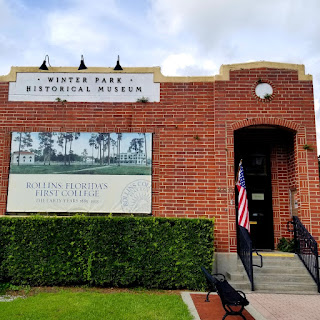
Winter Park History Museum

200 West New England Avenue, Winter Park, Florida

407-647-2330

Tuesday thru Friday, 10 AM to 4 PM, Saturday, 9 AM to 2 PM


Questions? Email Rick@CroninBooks.com


Friday, March 4, 2022

Women's History Month - Day 4


Frontierswomen of Central Florida


Flora (Call) Disney, mother of Walt Disney

A Women’s History Month Tribute

By Richard Lee Cronin, CroninBooks.com

4 March 2022


Day 4

CitrusLAND is observing Women’s History Month by honoring extraordinary Central Florida frontierswomen. And as we celebrate Women’s History Month throughout March, we are also promoting each day a local History Museum, listing days and hours of operation.

See our History Museum of the Day in this Post


Annie Louise #Caldwell Whitner arrived at Fort Reid in 1867 (now Sanford), coming from Civil War-torn North Carolina as a teenager with her parents. Her father, having witnessed too much misery and pain as a Civil War physician, planned to retire at Fort Reid. But instead, Dr. Andrew Caldwell, then the only medical doctor anywhere near Fort Reid, continued to practice, becoming a prominent Sanford area physician.

The Caldwell’s built a home along what this author has dubbed the First Road to Orlando, a dirt path – the old Indian War military trail – which connected Lake Monroe with Fort Gatlin and the county seat of Orlando. So, as a young lady, Annie Caldwell witnessed the influx of newcomers to an ever-developing Citrus-Belt region. The historic Caldwell residence is still standing today.

Among Annie Caldwell Whitner’s contributions to Central Florida were her writings, for much of what we first learned of the earliest days comes from, ‘An Early History of Orange County,’ authored by Annie and published in 1915 under her married name, ‘Mrs. J. N. Whitner’. Annie Whitner’s history was published as part of a “Foreword” in Clarence E. Howard’s book, Early Settlers of Orange County.’


The Council Oak (1915) photo included with Annie Caldwell’s History of Orange County


Annie told us of the sacred “Council Oak” at Fort Gatlin, a live-oak tree that by 1915 was on its final days. Said to have served as an Indian gathering place, her history included a photo (see above) of a painting done by J. M. Alden of the sacred tree.

Annie Caldwell Whitner was instrumental in organizing the first Orange County Historical Society in 1913. Sanford and Fort Reid were at that time in Orange County and became part of a new Seminole County in 1913. Annie, in 1927, also served as a consultant for a more detailed Orange County history authored by Rollins College President, William F. Backman, A History of Orange County by Blackman was at the time the most comprehensive history of the county.

The circa 1913 Orange County Historical Society founded in part by Annie (Caldwell) Whitner, is not the same Orange County society which exists today. The current society was founded in 1971, and it remains uncertain how much of the original historical information gathered by the first society was transferred to the latter. The Council Oak painting, donated in 1971, has not been located to date despite several searches.

[Further reading: Beyond Gatlin: A History of South Orange County, and CitrusLANDFL: Curse of Florida's Paradise, both by Richard Lee Cronin.] 


Miss Flora #Call Disney, said the Orange County Gazetteer of 1887, was the schoolteacher in the little town of Acron. Today a Lake County Ghost Town, Acron of 1887 was the home of a Canadian lad named Elias Disney. On January 1, 1888, Miss Flora and Elias Disney married at her parent’s home in nearby Kismet. Acron and Kismet, both Orange County towns in 1887, are now Lake County Ghost Towns.

Described in 1887 as a “howling wilderness” when founded in 1883, Kismet, about 6 miles south of Altoona, can be described today about the same. Back in 1885 though, Charles Call, Annie’s father, was teaching school at Kismet.

The freeze of 1894-95 killed many an orange grove, including the grove of Elias & Flora Disney, so like so many other central Florida families, the Disney’s moved away. Their son, Walt Disney did return – and in a big way.


Sarah #Church Whitner, (1820-1890) after first raising a family at Madison, in Florida’s Panhandle, came to Fort Reid (now Sanford) after the Civil War, where she made central Florida history.


Sarah (Church) Whitner

Sarah partnered with Mary (Pitts) Randolph (see later post in this series) to manage the first ever free-standing hotel south of Lake Monroe. Constructed in 1869, Sarah and Mary established the historic Alaha Chaco, or Orange House Hotel, situated in an orange grove of 40 acres.

Even more than merely managers of the first hotel in Orange County though, Sarah Whitner and Mary Randolph were the first known female proprietors in all of Orange County – operating a hotel at a time in history when women typically did not involve themselves in business. (Note: credit for establishing the Orange House Hotel has, in the past, been given to William Mayer Randolph, husband of Mary, and to Fort Reid land agent Matthew R. Marks. Recorded deeds however prove otherwise).

Sarah was the wife of Benjamin F. Whitner, Jr., the first surveyor of South Orange County, that region south of Orlando, a region which includes Lake Conway, the Disney area, Kissimmee, and more. The Whitner’s acquired a considerable amount of land in the Pine Castle region prior to the Civil War, and after the war, the family settled at Silver Lake south of Sanford.

Sarah’s husband, Benjamin F. Whitner, was the brother of Joseph N. Whitner, Sr, and father-in-law of Annie (Caldwell) Whitner first mentioned in today’s post.

[Further reading: CitrusLAND: Curse of Florida's Paradise; First Road to Orlando, and Beyond Gatlin: A History of South Orange County, each book by Richard Lee Cronin].


Our History Museum of the Day:

STEFFEE HOMESTEAD & MUSEUM 


4280 W. Vine Street, Kissimmee, Osceola County

Open daily 8 AM to 5 PM but call first to verify

407-569-8356

The original 1890 Shingle Creek Cabin, originally used as a family hunting and fishing camp, sits along the creek. A trail crosses historic Shingle Creek, near where, in 1890, the Florida Midland Railroad crossed on its way from Apopka to Kissimmee.

According to the park’s website, bike, canoe, kayak, and paddleboard rentals are now available.


DON’T MISS TODAY’S BIG EVENT

LAKE COUNT RAILROAD HISTORY

Tavares History Museum 10 AM to 2 PM


Tavares Trains

Presentation by R. L. Cronin


Tavares Trains presentations times: 10 AM; 11:30 AM & 1 PM


Questions or comments? Rick@CroninBooks.com


Thursday, March 3, 2022

Women's History Month - Day 3


Frontierswomen of Central Florida


Howey Mansion, Howey-in-the-Hills, Florida

A Women’s History Month Tribute

By Richard Lee Cronin, CroninBooks.com

3 March 2022


Day 3:

CitrusLAND is observing Women’s History Month by honoring extraordinary Central Florida frontierswomen. And as we celebrate Women’s History Month throughout March, we are also promoting each day a local History Museum, listing days and hours of operation.

See our History Museum of the Day in this Post


Zora Chloe #Borton Williamson, not well-known among central Florida historians prior to my mentioning this lady in Chapter 1 of my Mount Dora book, Zora Chloe was certainly known to many residents of Tangerine and Mount Dora during the early 1900s. She and husband Benjamin purchased the historic Dudley W. Adams place at Tangerine in 1911. Zora became active as an officer in Mount Dora Citrus Growers Association, but her identity always appeared as “Mrs. B. F. Williamson.” Even a 1926 ad placed by the association in Mount Dora Topic listed Zora as, ‘Mrs. Williamson, despite the fact she spent more time in Florida as a snowbird and was more active in civic duties than husband Ben. Most every newspaper article about the Williamson’s mentioned only “Mrs. Williamson.”

As disclosed in Chapter 1 of, Mount Dora: The Lure. The Founding. The Founders., town co-founder John P. Donnelly mentioned “Mrs. B. F. Williamson” by name in his 1922 history of Mount Dora. But Donnelly described the grove of “Mrs. B. F. Williamson” as once belonging to Dora Ann Drawdy, going on to say Lake Dora had been named for Ms. Drawdy (See #Fletcher in a later installment of this series).

The historic homestead of Ben and Zora Chloe (Borton) Williamson however was first occupied by Dudley W. Adams, a historic figure cited too as founder of the town of Tangerine. Zora was indeed an active historical figure in two central Florida towns, Mount Dora and Tangerine, and her civic participation while a resident of Florida opened what had been a tightly sealed door to resolving the intriguing mystery of our early Citrus Belt history. Was Lake Dora really named for Dora Drawdy? The answer will likely surprise you!


Mount Dora Topic 1926 ad by the Citrus Growers Association

[Further reading: Mount Dora: The Lure. The Founding. The Founders., by Richard Lee Cronin. (Pick up a copy at Tavares History Museum, Friday, March 4th from 10 AM to 2 PM, or at East Lake County Heritage festival in Sorrento, Florida, Saturday, March 5th from 9 AM to 2:30 PM0.


Sarah #Broome Taylor of Lake Conway adds yet another a fascinating and unexpected twist to the 1875 Incorporation of Orlando, the formalizing of an already eighteen (18) years-old village called Orlando. Mrs. Sarah Taylor, in 1874, made two land acquisitions in Orange County, one on Lake Monroe (now Seminole County), and the other on Lake Conway. The year, again, was 1874.

Sarah’s Lake Conway property was miles south of Orlando, even south of the historic Pine Castle homestead of newspaper correspondent Will Wallace Harney. Harney was building his historic second residence when Sarah bought her land. Travel in 1874 however was difficult. Harney himself wrote in 1874 of a stagecoach running between Orlando and Mellonville during the “winter and spring,” leaving no available transportation during the other half of the year. So, did Sarah travel by horse and carriage” Or did she instead walk the nearly 30 miles to her lake Conway home?

Locals now know Sarah’s 1874 property as either side of Nela Avenue, a neighborhood rich in history even without mention of Sarah. But as Sarah bought this land long before Nela Avenue was imagined. And one wonders if Sarah might have been invited to Will Wallace Harney’s grand 1874 Christmas celebration during which his newly completed ‘Pine Castle’ was on display for all see.

Central Florida had yet to build its first railroad, so dirt trails remained the sole means of access for travel south of Lake Monroe. This however was likely not a problem for Sarah, for she did not relocate from her New York City residence. In fact, we can’t say for certain Sarah ever saw her Lake Conway property. Why then did she buy it?

Sarah Taylor’s first land purchase in 1874 had been at Mellonville. Where Sarah and brother Thomas each bought a town lot in the original village of Mellonville (near Sanford). They closed on the Mellonville purchase 6 February 1874.

Shortly after Sarah and her brother Thomas bought land in Orange County, an attorney arrived at Orlando from Lake City, Florida. It was the summer of 1875, and this attorney brought together a total of 20 local Orlando area landowners, including Jacob Summerlin, and he led the charge to incorporate the county seat of Orlando.

The attorney’s name was Robert W. Broome, a brother of Sarah (Broome) Taylor. Sarah became a central Florida female land speculator. Not the first, but among the earliest!

Those in the know knew of plans to build a railroad south from Lake Monroe to Tampa Bay, a train planned to travel along track skirting Lake Conway. If the train was built, Sarah’s land value would increase!

[Further reading: First Road to Orlando by Richard Lee Cronin and Rick’s Blog, Sarah of Lake Conway, March 11 and 18, 2020].


Katherine C. #Budd (1860-1951). Karen designed not one, but TWO historic residences in Lake County during the mid-1920s. Each home remains in use today, although one has since been converted into an outstanding museum. Katherine Budd’s architectural talent was recognized as early as 1924, the year she earned a place as the first-ever female member of New York City’s prestigious Chapter of the American Institute of Architects (AIA). And despite her architectural offices being headquartered at New York City, Katherine Budd visited Eustis and Tavares often during Florida’s Great Land Boom decade in the 1920s.

In addition to designing two Lake County residences, Katherine also bought, remodeled, and renamed the Lakeview Hotel at Tavares. The hotel’s new name became Biltavern Hotel, and to manage her hotel, Katherine hired William Shriver away from New York’s Biltmore Hotel.

Katherine Budd first designed the Duncan House on Lake Dora Drive in Tavares. Her client was Attorney Harry C. Duncan, and then, the following spring, Katherine “motored to Howey to be a luncheon guest of Mrs. W. J. Howey,” after which she was retained to design the impressive Howey Mansion, on N. Citrus Avenue in Howey-in-the-Hills.

Katherine Cotheal Budd also dabbled in Lake County land development, owning properties at Tavares and Fruitland Park, north of Leesburg.

Likely lured to Lake County by her uncle, a native of England, Hugh S. Budd was a real estate developer in Leesburg and Fruitland Park. But Katherine’s uncle had passed in 1920, after which Widow Gertrude A. (Hubbard) Budd took control of the land investments made by her deceased husband, an original partner in Budd & Cooke Company.

In my July 2021 blog, ‘In Search of Captivating Okahumpka,” Gertrude Budd was mentioned as a Lake Countian who worked to preserve the county’s natural beauty. “Of those who are holding many acres of wooded land in Florida having a vision for the vision,” said Eustis Lake Region newspaper in 1924, “Mr. R. F. E. Cooke and Mrs. Gertrude Budd own many acres of beautiful cypress trees on Okahumpka Creek, and along the highways of Lake County, and have refused many times to sell same to timber companies”.

Budd therefore was a respected Lake County name, no doubt encouraging Katherine Budd, a talented New York architect held in high esteem by homes builders nationwide, to become interested in designing two of Lake County’s most outstanding mansions, and one of the county’s best-known early hotels.


Lakeview Hotel, Tavares, later known as Biltavern Hotel.

Photo courtesy of Snapshot Photographs & Florida Past


Our History Museum of the Day

See Photo at beginning of this Post

The Howey Mansion, Howey-in-the-Hills

Tours available of the 20 room 1927 Mansion

Call for details: 407-906-4918


TOMORROW IS TAVARES TRAINS DAY


Lake County Railroad History Presentations

10 AM; 11:30 AM; 1 PM

Books by Richard Lee Cronin will be available for purchase.

Questions or comments? Rick@CroninBooks.com

Wednesday, March 2, 2022

Women's History Month - Day 2


Frontierswomen of Central Florida


Orlando School for Girls Advertisement, 1887 Orange Gazetteer

A Women’s History Month Tribute

By Richard Lee Cronin, CroninBooks.com

2 March 2022


Day 2:

CitrusLAND is observing Women’s History Month by honoring extraordinary Central Florida frontierswomen. And as we celebrate Women’s History Month throughout March, we are also promoting each day a local History Museum, listing their days and hours of operation.

Our Featured History Museum is at the end of this Blog


Miss Henrietta #Barbaroux, a Louisville, Kentucky schoolteacher, Henrietta came to Orlando with newlyweds Ida M. (Babbit) and William Palmer. Ida Babbit, a student of Henrietta’s back at Louisville, had also been raised by Miss Barbaroux after Ida became an orphan of the Civil War. After arriving in Orlando, Miss Barbaroux and the Palmer’s stayed at Jacob Summerlin’s hotel, where Henrietta worked for a brief time as manager before founding the Southern Home School for Girls in 1887, the forerunner to Orlando’s Cathedral School for Girls. Ida Mae Babbit, of Natchez Under-the-Hill, Mississippi, married William Palmer at Louisville on 19 November 1884, the very year the newlyweds sold lakeside property along the west shore of a lake east of downtown Orlando – a lake known today as Lake Underhill.

[Further reading: Orlando Lakes: Homesteaders & Namesakes, Lake Underhill].


Southern Home School for Girls Advertisement, 1887 Orange Gazetteer


Leora #Bettison Robinson, also a former Louisville schoolteacher like Miss Barbaroux, became a well-known author as well. American Women Biographies (1897) said of Mrs. (Leora): “It is conceded, that by her contributions to the press and a pamphlet, ‘Living in Florida’, she has done more to make immigration to the state than any other has accomplished.”

Leora married Norman Robinson at Louisville, KY, where together they founded the Holyoke Academy prior to moving to Orlando in 1881. Following the death of her husband, Leora platted an Orlando subdivision on Lake Leora (now Park Lake off East Colonial Drive). Cathcart Street was one of roads in Leora’s subdivision, named for her mother’s maiden name.

Leora Bettison Robinson had two other books published in the late 1800s, Patsy: A Story for Girls was first released in 1878. A later book, seemingly the book that earned Leora the most acclaim, was, The House with Spectacles, re-released in 2018 by Forgotten Books, Inc.

[Further reading: Orlando Lakes: Homesteaders & Namesakes, Lake Leora].


Mrs. Norman Robinson’s Add to Orlando


Mary #Blitch Tiner (1830-1911) (aka Tyner for those who prefer the “Y” version), was among the earliest frontierswomen to settle south of Orlando in post-Civil War Pine Castle. Mary and husband Leonard selected the north shore of present-day Lake Bumby for their homestead, a deed for which was issued in 1874, placing the Tiner’s on their land circa 1869 (allowing for the five-years residency requirement). 

Lake Bumby was the head of Shingle Creek then, a primary river route for those traveling south to Lake Tohopekaliga. Webb’s Historical Magazine of 1885 describes “Mrs. Mary Tinn (sic)” of Pine Castle as one of four (4) owners of “noted orange groves.” Mary, in 1879, had acquired eight (8) acres of the historic Will Wallace Harney homestead, and there is reason to believe Mary, along with son Clement R. Tiner (who filed the first town plat of Pine Castle), and pioneer Will Wallace Harney, were close friends in addition to being long-time neighbors.

Mary (Blitch) Tiner followed two of her sons south into Polk County in the 1890s, where she remarried and lived out the remainder of her life as Mary Lanier.

[Further reading: Will Wallace Harney: Orlando’s First Renaissance Man (2019) available through Pine Castle Historical Society, written for the Historical Society by Richard Lee Cronin].


Miss Emma #Boone acquired Mount Dora’s Lakeside Inn on 20 October 1892 from the partners who originally built the hotel in 1882. A native of New York, Emma had run a boarding house in the Big Apple prior to acquiring the popular winter resort hotel for snowbirds in Mount Dora. Miss Emma Boone operated the Lakeside Inn by herself for an entire decade, eventually adding a partner through her marriage. Emma, on 14 May 1903, married George D. Thayer.

Emma Boone kept the historic Mount Dora hotel open through the Great Freeze of 1894-95, a significant achievement considering the high rate of business failures - and central Florida town failures – that resulted from that tragic event. Lakeside Inn today boasts of being the longest continuous operating hotel in the State of Florida, a claim that can be made in large part to the business success of Miss Emma (Boone) Thayer.

[Further reading: Mount Dora: The Lure. The Founding. The Founders. By Richard Lee Cronin (2021)].


Lakeside Inn, circa 1910, Photo courtesy of Florida Memory Project


Our History Museum of the Day:


Mount Dora History Museum

Museum is located in the historic 1922 Fire House and Jail

450 Royellou Lane (alley), Mount Dora

Thursday to Sunday 1 PM to 4 PM

(Call to verify hours: 352-383-0006)


A Special History Presentation

TAVARES TRAINS

Tavares History Museum, downtown Tavares

10 AM to 2 PM

Railroad history presentations at 10:00; 11:30 and 1 PM

By Author & Historian, Richard Lee Cronin

Books by Cronin will be available to purchase at this event


Questions and Inquiries to Rick@CroninBooks.com