Sunday, March 12, 2023

Naming Lakes Sue & Virginia


Naming Lakes Sue & Virginia


1890 Orange County map of Lakes Sue and Virginia


During my ‘Naming the Winter Park Lakes’ presentation recently at the Winter Park Historical Association, I was asked about the accuracy of my version of how Lake Sue and Lake Virginia were named. It was a legitimate question since another written history had assigned credit for the naming differently: “Much, if not all the timber came from a sawmill of George W, Moyers,” says an alternate version about where the wood came from to build early Winter Park structures, “whose operation was located on a portion of Lake Virginia’s shore now occupied by Rollins College.” Mr. Moyers, concludes that alternate version, “named Lake Virginia after his state of origin, Lake Sue for his wife, the former Miss Henkel.” I believe this alternate version is wrong!

I stand by the documented account as stated in my book ‘Orlando Lakes: Homesteaders and Namesakes.’ As is so often the case in early Central Florida histories, oral histories are mistaken as facts to draw incorrect conclusions. There was indeed a pioneer named George W. Moyers, who did in fact have a sawmill and was indeed married to Susan Henkel. But Lake Sue was not named for Susan (Henkel) Moyers.

Lake Sue is known to have been named as of mid-1882 because it is mentioned in a deed dated the 3rd of July of that year. George W. Moyers never owned land on or near Lake Sue as of that date, whereas William F and Susan P. Russell were homesteaders on 160 acres when they sold forty of those acres to a Mr. Joseph H. Bruce, issuing a deed to the man which contained the following wording: “about eleven and one-half acres being land, and the remainder of said tract being in Lake Sue.” Russell’s deed correctly gives the location of Lake Sue as Section 18, Township 22 South, Range 30 East (Note the 18 printed on Lake Sue in the map above). “Mrs. Susan Russell,” after the death of her husband, also placed an ad in the Orlando Evening Star of 29 February 1884, attempting to sell her remaining 100 acres, land which, according to her ad, was said to be located on “Lake Sue.”


3 July 1882 Lake Sue deed by William F. & Susan P. Russell [OCID#18839022136]


George W. Moyers had relocated his family from Virginia by 1880 and was a resident of Orange County in the census of that year, but his original homestead was not at Winter Park. The Moyers homestead of 1880 was in Township 21 South (not Township 22 South), six miles north of Lake Sue. West of Altamonte Springs, Moyers property was near today’s intersection of Montgomery Road and Highway 436. When Moyers arrived in 1880, Altamonte Springs was at the time in its early development, and Winter Park had yet to establish itself.


1890 Orange County map of G. W. Moyers west of Lake Orienta, Altamonte Springs


The 1880 Orange County census lists the youngest Moyers child as 2 years old, born in Virginia. Moyers family records reflect that a son Kagen was born at Altamonte Springs, Florida, on “16 February 1881.” In February 1882, George W. Moyers purchased land at Winter Park, receiving a deed which described his property as located on the shore of Lake Osceola in Section 5, Township 22 South, 30 East. An 1884 map of Winter Park (see below) shows the Moyer property as located on the shore of Lake Osceola.


1884 Winter Park map showing G. W. Moyers parcel on Lake Osceola


Lake Virginia was already named when George W. Moyers relocated from Altamonte Springs to Winter Park. In fact, Lake Virginia was already named when Moyers arrived in Florida. We can establish this fact from another recorded deed dated May 29, 1878. The Moyers family was still at Virginia when Bolling R. & Helena Swoope signed a deed which included this description of the parcel being sold: “to a point in Lake Virginia.”

The Swoope’s had purchased 40 acres on Lake Virginia on October 13, 1876, acquiring the land from a friend and fellow Virginian, Anzi Arthur. Swoope and Arthur were residents of Augusta County, Virginia.


Lake Sue was indeed named for the wife of a pioneer who had homesteaded on the lake, but the last name of the pioneer was Russell, not Moyers. And Lake Virginia was in fact named for the state of Virginia by a resident who had relocated from that state to the Winter Park area, but the name of that pioneer was, I firmly believe based upon extensive research, Swoope not Moyers.

References for my research of each of the 303 lakes included in Orlando Lakes: Homesteaders & Namesakes can be found verified for I list them at the end of each lake.

Early Central Florida written history does indeed contain inaccurate information, but this is so, I believe, because of the tragic times our pioneers endured while attempting to tame a wilderness that was anything but kind to these newcomers. Survival topped the to-do list of every day life, and the recording of an accurate history was far down on that same list. But we have today an opportunity to peruse the many dated documents of yesteryear – and right their story. 


Orlando Lakes: Homesteaders & Namesakes
By Richard Lee Cronin


Tuesday, March 7, 2023

Sarasota Month: Bertha Honore Palmer

Sarasota Month: 

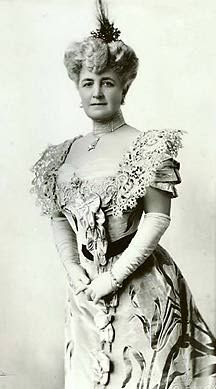
Woman's History Month: Bertha Honorȇ Palmer

Bertha Honorȇ Palmer (1849 – 1918)

Sarasota’s growth and development benefited immensely from its association with Bertha (Honorȇ) Palmer, widow of Chicago millionaire Potter Palmer. In 1910, newspaper headlines informed the world that Mrs. Potter Palmer had acquired 75,000 plus acres in the vicinity of Sarasota and Venice, along Florida’s famed Gulf of Mexico. By the time of her death in 1918, Bertha had, in eight years, nearly doubled the value of the estate that had been left to her by her husband. But even before her husband’s death, Bertha had herself become an accomplished individual. She was by no means simply a wealthy Widow.

A Triumphant World’s Fair:


The Inter Ocean, Chicago, Illinois 1 November 1893

“In the organization of the board,” reported an extensive review of the management of Chicago’s 1893 World Exposition, “it was generally conceded that the election of Bertha Honorȇ Palmer as President of the Board of Lady Managers was the wisest choice that could be made.” The independent review spoke highly of the achievements of the Board that had been formed in 1890, and went on to say, “she came to her position with very thorough social training, with tact and self-mastery that have been invaluable.”

“She is of Southern extraction,” said the World’s Fair review of Bertha Honorȇ Palmer, “being born in the city of Louisville. She was educated in a convent at Georgetown, D. C., and is still remembered there as a student of brilliant promise. She is a fine linguist and a pleasing conversationalist, two accomplishments that have been of the greatest advantage.”

In her role as President of the Board of Lady Managers, Bertha Honorȇ Palmer traveled to Europe to promote involvement by other countries in the Exposition. “At the time of the opening exercise last May (1892),’ the review article stated, “the board had the satisfaction of seeing represented in the Woman’s Building a valuable and complete showing from Great Britain, France, Germany, Austria, Russia, Italy, Mexico, Brazil, Siam, Denmark, Sweden, Belgium, Holland, and Greece.”

A Woman’s Building at Chicago’s World Fair:


The Woman's Building, Chicago World's Fair of 1893

Says the National Park Service website of the Board of Lady Managers for the Chicago 1893 Exposition: “During the planning stage, some civically engaged, upper-class women pressured Exposition administrators for greater representation. As a result, Congress authorized and funded the Board of Lady Managers. The 117 Board members were the first women who served in an official capacity at a world’s fair. Yet, women were still excluded from any major decision-making. Socialite Bertha Honoré Palmer served as the Board’s president.” One thing the NPS failed to say about the accomplishments of Bertha and her Board of Lady Managers is best summarized by an 1893 statement by a review of the Exposition itself:

“Mrs. Palmer’s efforts to exploit The Fair in Europe were not surpassed in zeal and perseverance by those which had such force and weight with the Congress of the United States. It is universally admitted that no one member of the National Commission or Directory exercised with that difficult body one-tenth the influence which Mrs. Palmer exerted through the force of her own personality.”


“It is a Lovely and Charming Place.”

In late fall 1916, while motoring south from Chicago toward Sarasota, Bertha Honorȇ Palmer detoured onto the Central Branch of the newly established Dixie Highway to pay a visit to Winter Park, a town she described that November as a lovely and charming place. The Widow Palmer had come to Orange County on both business and pleasure.

Earlier in 1916, Bertha Palmer had been elected the First Vice-President of the Florida Livestock Association, and so one reason for her driving to Central Florida was to visit with Dr. William Fremont Blackman. Retired from his position as President of Rollins College, and not yet ready to publish his acclaimed History of Orange County, Dr. Blackman had been elected President of the Florida Livestock Association at the same meeting that February. And so, among other places in Central Florida she planned to visit, Mrs. Palmer toured Dr. Blackman’s 4,000 acres Wekiwa Ranch on the St. Johns River. Afterwards, she visited the Willett Ranch at Lake Maitland to “view the thoroughbred hogs that Mr. Willett was making a specialty of,” prior to proceeding toward her winter residence near Venice. Bertha Honorȇ Palmer was by no means a passive Florida rancher.

Nor did Bertha Honorȇ Palmer likely appreciate how historic her journey through Central Florida had been. After crossing the St. Johns River at Lake Monroe, her motoring would have taken her into downtown Sanford, where in the 1880s, arriving settlers the likes of Piers E. Warburton would have disembarked from steamers arriving from Jacksonville. Piers Warburton came in 1883 and settled at Maitland before moving further south to lay the groundwork for a town of Sarasota.

Driving the new Dixie Highway in 1916, Bertha would have passed through Longwood, where in the early 1880s, the Longwood Whisper was being published by a man who was to become known as the “Dean of South Florida Press,’ the very “Dean” who later published Sarasota’s first-ever newspaper. Next, after departing the lovely and charming town of Winter Park, Bertha Honorȇ Palmer would have crossed a narrow strip of land separating Lakes Ivanhoe and Highland on her way into Orlando, where roadside was located the one-time residence of Joseph H. Lord, the very person who had enticed Bertha to bring much of her vast wealth to Sarasota.

Look for my booth at Sarasota's

History Day in the Park

Phillippi Estate Park

March 25, 2023 from 10 AM to 5 PM

Florida history is chock full of fascinating individuals and intriguing happenstances, a shared heritage between Orlando and Sarasota included. Railroads of the 1880s became the initial link – a means by which to reach Tampa Bay from the steamboat docks at Sanford. And although that was before Bertha Honorȇ Palmer’s time, it was the precise time for a young Irish lass named Winifred A. Hodgson to make the long journey from England to Sarasota. 

Florida history indeed includes many of the most fascinating individuals ever – men and women alike. You read a bit about Bertha, was one such founder, and Winifred, she will be next in this March series.

To Sarasota, with Love, Orlando

Our Shared Heritage


By Richard Lee Cronin

Pick up a signed copy at History Day in the Park

Or, Buy it today at Amazon

https://www.amazon.com/author/richardcronin


Thursday, February 23, 2023

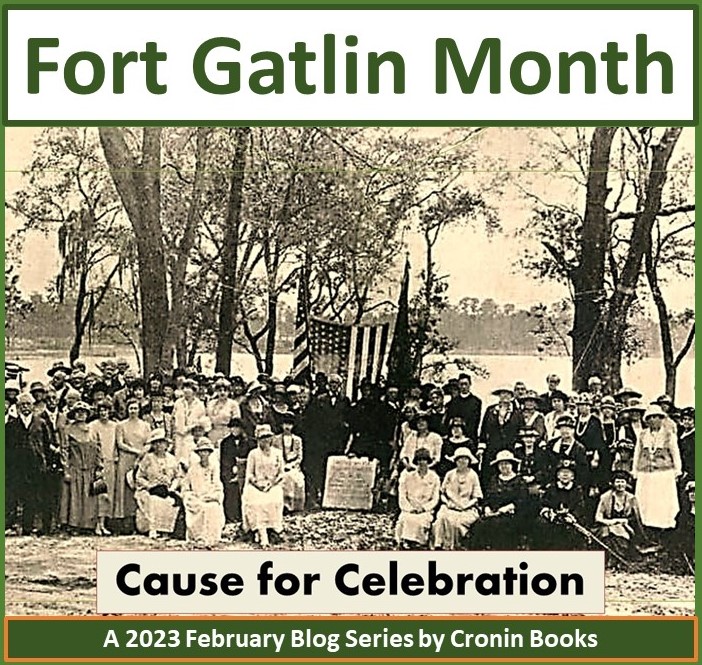
Part IV Fort Gatlin Month: The Cabin

 Dateline Fort Gatlin: The Cabin  

March 27, 1924 at Fort Gatlin 

Three decades after pioneer William Wallace Harney wrote of seeing “the site of old Fort Gatlin, with its camp drill grounds and marks of old quarters and chimneys still standing,” an admirer of Harney’s poetry, William Dunbar of New Orleans, called upon the aging poet at the tiny hillside cabin where Harney was living in 1904. Harney’s home in 1904 was no longer his historic “Pine Castle” of the 1870s. He no longer looked out across Lake Conway from his residence, as he had done so as the Orange County pioneer who had inspired the founding of a city named for his lakeside dwelling. Will Harney was 73 years old when Dunbar came knocking on the door of a little cabin atop Gatlin Hill, where his view then was of Lake Gem Mary, a lovely little round lake named in 1870 for the mother of Will Harney’s beloved bride, Mary St. Mayer Randolph.

“He was a rather small man, heavy-set, with one of the most superb heads I ever saw. His brow was so high it reminded me of pictures of Shakespeare. His eyes were handsome, and very intent and keen. He was most gracious in his manner and cordial, seeming to really appreciate my visit.”

William F. Dunbar’s description of Will Wallace Harney

Established in 1838 and abandoned by the Army in 1842, the brief existence of a remote Army fortress became etched in the annals of Central Florida history not so much because of its brief stint as an Army outpost during the Second Seminole Indian War, but rather because of the pioneers who came thereafter – and kept the memory of Fort Gatlin alive.

Fort Gatlin as a settlement pre-dates Orlando. Named by the earliest pioneers, individuals such as Aaron Jernigan, a Fort Gatlin community encompassed a large portion of Orange County, extending north from the fortress and encompassing that which we know of today as Orlando, the county seat.

The writings of correspondent Will Wallace Harney, published in the Cincinnati Commercial newspaper during the 1870s, wrote of Fort Gatlin, the historic location owned as of the 1870s by Harney’s in-laws, William & Mary (Pitts) Randolph. And it was on the east side of the old Fort Gatlin, only weeks after Harney’s arrival in Central Florida in December 1869, where he buried his one true life-long love, Mary, his bride of only18 months.      

“The Randolph Family erected and occupied a fine home on the northwest shore of Lake Gem Mary; this lake was named for Mrs. Randolph. A family burial ground, often mistaken in later times for an Indian burial place, was located near the house; in this some half-dozen bodies were interred, all of them later being removed to Greenwood Cemetery.”

History of Orange County by William Fremont Blackman (1927)

Government surveyors first arrived in Central Florida to survey the land south of Lake Monroe in the 1840s. The first landmass surveyed however was south of both present-day towns of Orlando and Sanford. In fact, seventy-two square miles of Orange County, land surrounding Fort Gatlin and Lake Conway, had been surveyed before the land from Orlando north to Sanford was surveyed.   

Gatlin Hill, the name coined for the historic property tucked between three awe-inspiring lakes; Jenny Jewel, Gem Mary, and Lake Gatlin, was purposely selected for a greater role by the first private citizen to step foot on Gatlin Hill following the end of the Seminole Indian War. Deputy Surveyor Benjamin F. Whitner not only envisioned a great future for this location, he also took part in developing that planned role. Whitner acquired hundreds of acres around old Fort Gatlin years before the village of Orlando was founded.

“In the dead of the night, the dead of the night

There’s a sound along the rails.

The creaking of a whirling crank

Like the flapping of iron flails.

With the long, low roll that herald’s a storm,

Over sunburnt fields of grain:

With the sullen roar of rain in the wood

Comes the Invisible Train.”


The Phantom Train

By Will Wallace Harney

 Cypress Grove Park, one mile east of Gatlin Hill, is the location of Pine Castle Pioneer Days, an annual celebration of this region’s bravest of the brave, the founders and settlers who carved out a remote wilderness to create a region we know and love today as South Orange County. There is much to see, do, and hear at Pine Castle Pioneer Days, such as Vintage Baseball, a Classic Car Show, great Music all day long, and scheduled history talks at the History Tent.

Bring the family and help celebrate the legacy of Fort Gatlin. You even stop by my Cronin Books booth and pick up a signed copy of my book, Beyond Gatlin: A History of South Orange County.


 The History Tent schedule for February 25, 2023


The History Tent schedule for February 26, 2023


Beyond Gatlin: A History of South Orang County

Available in Paperback & Hardcover

By Richard Lee Cronin

Rick’s March Blog Will Celebrate Sarasota Month

Thursday, February 16, 2023

Part III - Fort Gatlin Month: The Militia

Part III: Fort Gatlin’s Militia

Countdown to Pine Castle's Pioneer Days

Snell's Home, Sarasota Bay, and the Captains of 1856 Fort Gatlin

On the 7th of January 1856, Florida’s Adjutant General notified communities throughout the state that they should form a militia immediately to protect themselves. Indians had again gone on the offensive, so at Fort Gatlin, veteran Indian fighter Aaron Jernigan answered the Governor’s call by organizing an Orange County Militia consisting of eighty-three (83) settlers. During the months leading up to the Governor’s statewide militia call, beginning in late December 1855, the Indians had attacked an Army regiment in southwest Florida led by Lt. George L. Hartsuff.

It had been thirteen years since the Second Seminole Indian War had been declared over, but in 1856, fears were that a third war would soon be underway. As in prior conflicts, the warriors did not confine their raids on the military. “We have reliable information direct from Tampa” reported the Alligator Advertiser of Manatee County on 16 March 1856 ”that twelve Indians had attacked the premises of the Honorable H. V. Snell at Sarasota (Bay), about sixty miles south of Tampa, and nine miles from the Manatee settlement.” The homesteader, Hamlin Valentine Snell (1810-1886), was not home at the time of the attack, but a gentleman by the name of Cunningham died in the attack. Snell’s home was burned to the ground.

MARCH IS SARASOTA MONTH

North of Tampa in Hernando County (now Pasco County), on 14 May 1856, yet another Indian raid claimed the life of two young children who had been standing on the porch of their family dwelling when the Indians began firing on the home. “Known today as the Bradley Massacre, a history marker now tells of the attack: “A Seminole War party attacked the home of Robert Duke Bradley of the Florida foot volunteers. Two of the Bradley children were killed before the Indians withdrew. This was the last such attack on a settler’s homestead east of the Mississippi.”

Pine Castle Pioneer Days

February 25 & 26, 2023

Cypress Grove Park, 290 Holden Avenue, Orlando, FL

There was, of course, no way of knowing in May of 1856 that the Bradley Massacre was to be the last such attack on homesteaders, so at Orange County, Jernigan’s militia readied itself to defend their communities. Although qualified to lead based on his years of fighting Indians in Georgia and Florida, Aaron Jernigan, in 1856, was not the right candidate for the job. He had witnessed an Indian raid in 1839 on his Georgia home, during which a member of his family was killed. Then, a decade later, Jernigan sheltered his family at Fort Gatlin (Part II) fearing yet another raid, this time on his new home in Florida. 

So, in September 1856, Jernigan’s Orange County Militia needed a change of guard. The conduct of the Militia had been called in question, with some reporting that "Jernigan's company, stationed for the protection of settlements, in some cases were dreaded by the settlers more than the Indians." Charged with mistreating Indians, Captain Jernigan was relieved of command, with Isaac Newton Rutland being named the new Captain of the Orange County militia. (Rutland, in January 1861, cast the second vote opposing Secession for Orange County. The Rutland Mule Matter, by Richard Lee Cronin).  

The complete list of Orange County’s 1856 Militia “mustered in” at Fort Gatlin will be found in Appendix A, (page 225), of Beyond Gatlin: A History of South Orange County, now available in Paperback or Hard Cover, by Richard Lee Cronin.


Now available in Paperback and Hard Cover

Beyond Gatlin will be available at Pioneer Days


As most all of Florida had been surveyed during the 1840s, these surveys at times included any in place residence or fortress at the time the survey was made. Both Fort Gatlin and the home of Hamlin V. Snell are shown on the earliest surveys of each specific location.

Hamlin Snell’s home was built on the beach of Sarasota Bay about two miles north of present-day downtown Sarasota. The site of Snell’s home later became known as Indian Beach (not to be confused with Indian Rocks Beach of Pinellas County). Today par of Sarasota, a town of Indian Beach existed here as early as 1891. This stretch of Sarasota Bay beach, in the 1880s, had even more in common with Orange County than the Indian raid of 1856.

March: Sarasota Month - Our Shared Heritage


 Pioneer Days - Day 1: Professor Paul W. Wehr Day

1856 was a pivotal year for Fort Gatlin. A metropolitan area known up until then as Fort Gatlin became known in 1856-57 as Orlando. The name change came about by the Militia members of 1856 who also voted on a location for a new Orange County seat of government. For more than a century a factual tally of that election was never accurately reported by the historians who have written of the founding of Orlando, Florida.

The accurate result of the election of 1856 is publicly available today because of one man, a true historian, Paul W. Wehr. A professor of history at the University of Florida for twenty-five years before his retirement, Professor Wehr traveled to Tallahassee in years past and dug for the long-buried election results of 1856. And finding the tally sheets, Wehr documented the surprising results in his book, From Mosquito to Orange County, published by the Pine Castle Historical Society in cooperation with the Pine Castle Woman's Club.

I Invite you to join me at 10:15 AM, Saturday, February 25, 2023, at the HISTORY TENT at Pine Castle Pioneer Days, as I open this year's lecture series with a tribute to Author and Historian, Professor Paul W. Wehr.

Then, stop by Cronin Books Booth, adjacent to the History Tent, and say hello. 


Friday, February 10, 2023

Part II: Holed Up at Fort Gatlin

FORT GATLIN MONTH

Part II: Holed up at Fortress Gatlin:


Martha Jernigan Tyler at Fort Gatlin in 1924

In her memoirs, pioneer Martha (Jernigan) Tyler (1839-1926) wrote of an 1849 Fort Gatlin memory, stating that as a young girl, her family “was fortified on the north side of Lake Conway, right against the peninsular, from the Indians.” But why were the Jernigan’s fearing Indians in 1849?

Established in 1838, Fort Gatlin was abandoned in 1842 because General Worth declared the end to the Second Seminole Indian War. Soldiers left the area and settlers returned home to fend for themselves in Florida’s untamed wilderness. So why then, seven years after the War had ended, was Martha Jernigan and 77 other bravest of the brave Central Florida pioneers “fortified” in an abandoned Fort Gatlin?

The answer lies in an 1849 “Wakulla Times” (sic) newspaper article, a story reprinted days later, on 11 August 1849, by The Pensacola Gazette. The article supports Martha Tyler’s recollections as a young girl of ten. Another paper, published in September 1849, also backs up Martha’s memoirs: “The inhabitants of these districts are all forted and have abandoned their crops.”

The Wachula newspaper told of an incident that occurred on 17 July 1849. “Indians,” the story said, “appeared at a store located on Peas Creek that was kept by a Mr. Payne.” George Payne was indeed a storekeeper on Peas Creek, in then Manatee County, and Indians, according to the news account, “fired through the door of the store and killed Messrs. Payne and Whidden and wounded Mr. McCulloch.”


General Store at Payne's Creek Historical State Park

Mrs. Payne, said the article, “escaped out the back with her child, and after firing a shot to deter the Indians, Mr. McCulloch followed her.” Dempsey Whidden (1828-1849) and George Payne both died at the hands of rogue Seminole Indians on 17 July 1849. The location is now part of Hardee County.

Facts traveled at a snail’s pace in 1840s Florida, and so unfortunately, settlers throughout Florida assumed the Indians had once again gone on a rampage. And while facts traveled slow, bad news tended to spread quickly, which is why 75 miles northeast of Payne’s Peas Creek General Store, 26 Orange County adult settlers, together with their 52 children, gathered at the abandoned Fort Gatlin.

The killing of two settlers and wounding of two others brought out the panic in settlers who still had vivid memories of scalping and burning homesteads of a decade prior.

Two months after the incident, Chief Billy Bowlegs sent runners to meet with Captain John C. Casey (Casey’s Key) at “Sara Sota” (Bay). The Chief expressed regret for “the late murders and said he would be able to settle the difficulty to the entire satisfaction” if Captain Casey agreed to meet. In the meeting that followed, Chief Billy Bowlegs blamed the incident on five rogue Seminoles who “lived on the Kissimmee River, one of whom was a criminal”. The Chief told Captain Casey that all five murderers had been “overtaken and captured.”

 MARCH IS SARASOTA MONTH

A Month-long Celebration You Wont Want to Miss!

Today, Peas Creek is Payne’s Creek, and the Payne’s Creek Historical State Park now preserves the memory of one fateful day in July 1849. But it is not so 75 miles northeast of Payne’s Creek, where a busy three-way residential intersection where Fortress Gatlin once stood has but a historical marker for those who care to park and read about the fort’s location, the fortress where settlers hunkered down 174 years ago after hearing of the Payne’s General Store incident.


Fort Gatlin: A Gateway to South Florida

Beyond Gatlin: A History of South Orange County

Available in Paperback and Hardcover

By Richard Lee Cronin

The history of Sarasota and Orlando intersected one fateful July afternoon in 1849, but it was not to be the only such incident shared by these two great Florida municipalities. In fact, 1849 was but the beginning, a topic to be continued in Part III of my Fort Gatlin Month blogs.

Purchase a copy at Amazon.com using this QR Code


OR, Pick up a signed copy at Cronin Books Booth

Pine Castle Pioneer Days

February 25th and 26th 2023

History Day in the Park, Sarasota

March 25, 2023

Friday, February 3, 2023

Part I: Fort Gatlin Marching Orders

Count Down to Pine Castle Pioneer Days

Part I: Marching Orders


Soldiers Creek on the Fort Mellon to Fort Gatlin Trail

The long-anticipated dispatch many had no doubt dreaded finally arrived. For twenty (20) long months after their encampment had been raided by the Seminole Indians, a raid which claimed the life of Capt. Charles Mellon, soldiers at Fort Mellon had been awaiting orders to march. That order came down in late October 1838, instructions to “occupy the position at Fort Mellon, and to establish a post 25 miles beyond, in the direction of Lake Tohokaliga (sic).”

South was the unstated direction of Lake Tohopekaliga, and the distance of twenty-five miles, that meant the soldiers would be heading deep into Indian territory. A sandy trail leading south was to be their only guide, a sand-rutted trail laden with obstacles that soon after became known as the Fort Mellon to Fort Gatlin Road.

January Blogs Observed Fort Mellon Month

What does Sarasota and Lake Monroe have in common?

March 2023 is Sarasota Month

Lake Tohopekaliga was where the Seminoles were believed to be holed up, and the order to advance south from Fort Mellon was one of a three-prong approach to reaching the lake. Fort Christmas, established east of Lake Monroe in December of 1837, was the eastern flank, with Fort Mason, at Lake Eustis west of Lake Monroe, was the western “prong.”

Marching southwest through a thick forest of pine trees, scrub oaks, and palmettos, each and every sound heard represented a potential threat. Alligators, bears, and panthers, if not Indians, might be awaiting at every bend. Twenty-five miles does not seem all that great a distance today, but back in the 1840s, it was a long tedious dangerous journey lasting two days. And the maiden journey for troops in 1838 likely took even longer.

The actual route taken by the troops as they headed south from Fort Mellon was documented in the 1840s by government surveyors. And this very military trail was then used for nearly four decades by the earliest of Central Florida settlers.

Soldiers Creek Park in Seminole County today was the first treacherous crossing in 1838 for the soldiers on their trek southward. Six miles south of Fort Mellon, crossing this deep ravine was the furthest thing from a walk in the park at that time.


Present-day Soldiers Creek Crossing

At sixteen miles south of Lake Monroe the Army settled down for their first night. A lakeside camp was chosen for the night and this location was also selected as the site for a supply fortress to be named Fort Maitland. Captain William Seton Maitland was a fallen comrade who had died August 19, 1837, of wounds received at the Battle of Wahoo Swamp. (Established in November of 1838, soldiers stationed at Fort Maitland would “be immediately withdrawn” in July 1839 following an Indian attack in South Florida which resulted in the loss of “the greater part of Lt. Col. Harney’s regiment.”

What does Sarasota and Maitland have in common?

March 2023 is Sarasota Month

But back to November of 1838, soldiers continued southbound from Fort Maitland, crossing over the second major obstacle, called the Maitland Branch, before passing by an uninhabited landmass at twenty-two miles south of Lake Monroe, land that in twenty years would become the village of Orlando. Continuing a push southward, yet another encampment was established about five miles beyond, “on a knoll, between two beautiful lakes and projecting into a third.” The fortress, named in honor of Dr. John Slade Gatlin, killed at the Dade Massacre of December 1835, was established on 9 November 1838.


Fort Maitland Historical Marker at Lake Maitland

One mile west of the 1838 Fortress Gatlin, at 290 Holden Avenue, is Cypress Grove Park, where on February 25 and 26, the 50th anniversary of Pine Castle Pioneers Days will be celebrated. Make plans to attend Pioneer Days, and set aside time to visit The History Tent for one of a dozen speakers over the two-day event. A tribute to Professor Paul Wehr and Fort Gatlin will begin the History Tent scheduled talks at 10:15 AM on Saturday morning.

What does Sarasota and Pine Castle have in common?

March is Sarasota Month


UCF Retired Professor Paul W. Wehr (left) with Rick Cronin 

The Entire History Tent Speakers Schedule will be posted in my next blog 

Want to more about central Florida history?
Visit my Cronin Books Tent adjacent to the History Tent at Pioneer Days 


Wednesday, January 25, 2023

Lake Monroe - Doyle & Brantley - Part 4 of 4

FORT MELLON MONTH, Part 4 of 4 

Doyle and Brantley at Mellonville

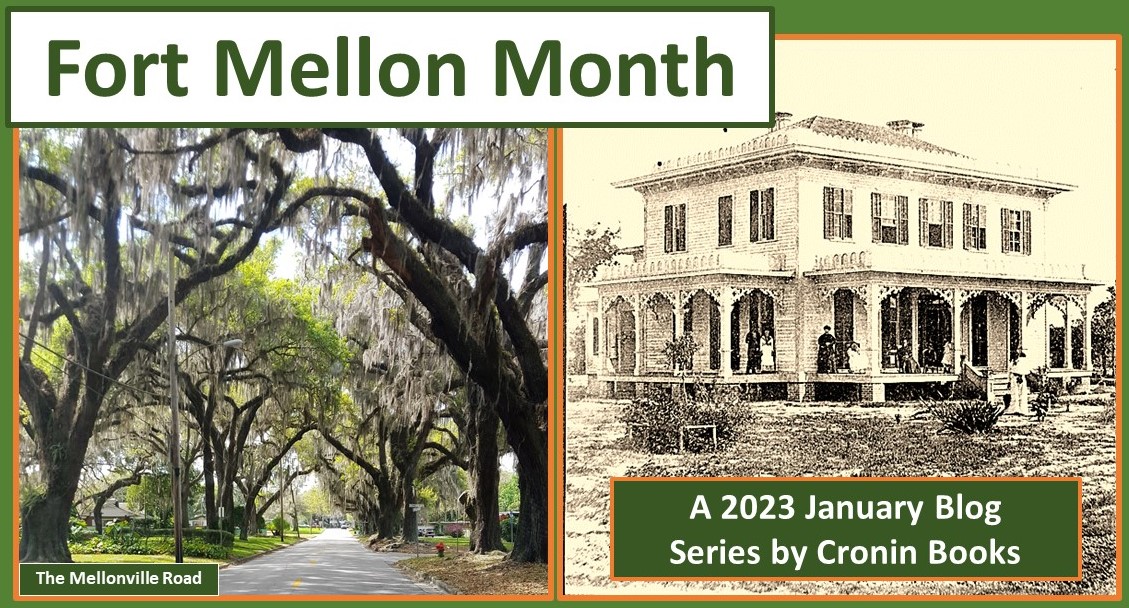
Mellonville Road of today and yesteryear’s Doyle Residence at Mellonville

More like that of a scene out of a Wild-West picture show, it’s not easy today to imagine 300 to 400 painted warriors storming the Lake Monroe beach in their attack on Encampment Monroe. A fierce battle however did in fact occur on the south shore of Lake Monroe on 8 February 1837, a Seminole Indian War clash which forever changed Central Florida. 

The Grave of Capt. Charles Mellon

The most noticeable change occurred within days of the incident, with Encampment Monroe being renamed Fort Mellon in honor of the one fallen comrade, Captain Charles Mellon (Part III). The battle of 8 February 1837 was but the beginning of a series of claimed land ownerships that, by the 1880s, would officially establish a gateway for Central Florida settlers.

Coming in February: Fort Gatlin Month

While the Army fought for control of Lake Monroe’s south shore in 1837, a battle of a different nature was already underway at the U. S. Supreme Court in Washington, DC. A Morocco native named Moses was arguing before the court that the very same Florida Territory property, 12,000 acres to be exact, rightfully belonged to him. Spain, said Moses E. Levy, had granted this land to him, and on these 12,000 acres he planned to establish a homeland for persecuted Jews of Europe. Levy had won his case, but the United States filed an appeal.

Spanish Land Grant map of 12,000 acres on Lake Valdez

Moses Elias Levy Grant

Lake Valdez was renamed Lake Monroe

Meanwhile, back in the Florida Territory, two soldiers of the Second Indian War, recruits from the North who survived the six-year War, remained behind as their comrades began to pack up and return home. And the two who stayed in 1842 forever changed Central Florida.

Henry A. Crane of New Jersey and Augustus J. Vaughn of Virginia both remained at their posts – literally – after victory had been declared. Crane and Vaughn became the first settlers, two of the bravest of brave who claimed homesteads south of Lake Monroe.

Henry Crane homesteaded fortress Mellon and 160 acres surrounding the abandoned fort. He established a settlement there, naming it Mellonville. The pier on Fort Mellon built by the Army became a port of entry for private citizens, a landing spot for the earliest steamboats to offload settlers – more of the bravest of brave Central Florida pioneers.

Augustus Jefferson Vaughn homesteaded Fort Reid, a supply fort 1.5 miles inland that had been established just prior to the end of the War. Vaughn selected 160 acres which included the old fortress, and he too established a settlement, naming it Fort Reid (misspelled Reed in 1846 by an early surveyor). [A visitor to Fort Reid in 1873 met an “old gentleman,” Augustus Vaughn, and asked if he could see the fort and its soldiers. Augustus Vaughn replied, “This is the fort, and I am the soldier”]

Fort Mellon and Fort Reid were connected by a trail 1.5 miles long, the first part of a trail that was 22 miles long and known in the 1840s as the Fort Mellon to Fort Gatlin Road. In the 1850s this trail became the Mellonville to Orlando Road, and, for the short portion still in existence, is now known as Mellonville Road.

Coming in March: SARASOTA Month

Settlements Mellonville and Fort Reid were both established in 1842, prior to the Homestead Act Amendment requiring homesteaders to select acreage at least two miles or more from an Army post. Central Florida pioneer Aaron Jernigan arrived in 1843, desiring to homestead Fort Gatlin, but was required instead to choose land that was two miles from the fortress Gatlin – a story best told next week – during Fort Gatlin Month – our countdown to Pine Castle Pioneer Days series.


As Mellonville began developing on the shore of Lake Monroe at the old fortress, the Supreme court in Washington, DC, ever so slowly deliberated the fate of the Moses Levy Grant. In 1850, 18 years after Levy had filed his Spanish Land Grant lawsuit, a final decision was handed down giving Moses E. Levy his land. Then a resident of St. Augustine, Levy was awarded all 12,000 acres, and the Court also ordered a surveyor to return to Central Florida to establish boundaries of the Levy Grant.

Eastern boundary of 1850 Mellonville Survey

Surveyor Arthur Randolph found half of Mellonville, including the Lake Monroe wharf, to be located on property belonging to Moses Elias Levy as of 1850. The 1842 Homestead of Henry A. Crane was voided, and Crane thereafter departed Orange County.

Moses E. Levy sold his 12,000 acres on the south shore of Lake Monroe to an Irishman, Joseph Finegan, who soon after became Florida’s Brigadier General during the Civil War. Finegan sold his 12,000 mostly undeveloped acres to a Northerner, Henry S. Sanford, who in turn sold most of his unsold city of Sanford to a consortium of English Investors.

Although Joseph Finegan still owned most of the 12,000 acres in 1867, one small parcel had been sold to Michael J. Doyle and George C. Brantley, two Civil War veterans who decided to establish a General Store on the south shore of Lake Monroe near the old Fort Mellon Wharf. The Doyle & Brantley store welcomed a new generation of settlers to Orange County - a remarkable generation of dreamers - and doers - from around the globe.

In later years the gateway would shift one mile to the west, but during the 1870s, the First Road to Orlando opened the way to development of the Central Florida we know and love today.  

My Five-Star Rated First Road to Orlando is available at Amazon.com

 Available also at my CroninBooks Booth next to the HISTORY TENT

Pine Castle Pioneer Days, February 25 and 26, 2023

FORT GATLIN MONTH BEGINS

Next Wednesday, February 1, 2023