Friday, January 12, 2024

New Smyrna Beach via Pine Castle Pioneer Days


New Smyrna Beach via Pine Castle Pioneer Days?


Historian Robert Redd to be a History Tent Guest Speaker 

The History Tent by Pine Castle Historical Society

One of our nine guest speakers at this year’s Pine Castle Historical Society History Tent, we are thrilled to announce, will be Historian Robert Redd of Volusia County.

But why, some might question, a Volusia County speaker in Pine Castle, Florida? A question of this nature would be reasonable for those new to our area, or even for one who is not up to par on how Central Florida developed during its earliest years.

Volusia County history, however, should feel right at home here in Pine Castle, in the heart of Orange County - and for a plethora of reasons.

Orange County’s second post office opened 5 June 1845 at New Smyrna, merely three days after the first Orange County post office had opened at Enterprise. Each place is today part of Volusia County, but back in 1845, New Smyrna was a village in the newly established county of Orange, in the newly formed State of Florida. For the next nine years, from 1845 until 1854, Orange County had oceanfront property to offer - but only a handful of settlers dared to venture this far south in the new State.

The 1850 census of Orange County recorded 566 inhabitants, with half of these courageous citizens living east of the St. Johns River in what would become Volusia County in 1854. The remaining 250 plus brave souls lived in what is now Orange, Osceola, Seminole and half of Lake Counties.

J. McRobert Baker (Exhibit 10, Beyond Gatlin: a History of South Orange County by yours truly)


In 1854, State Legislator J. McRobert Baker introduced a Bill to create Volusia from Orange County. Volusia was made official on 29 December 1854. Although a resident of Duval County, J. McRobert Baker was interested in Orange and Sumter County, and he even owned 40 acres at Fort Gatlin – the Pine Castle region of today. (Fort Gatlin is east of and just up the hill from Cypress Grove Park, where the History Tent will be located). 

J. McRobert Baker was also responsible for sneaking a Bill through the legislature making Orlando the County Seat of Orange County in 1857. With Orlando the County Seat, chances of a railroad crossing Baker’s property at Fort Gatlin increased – thereby increasing land values too.

Unfortunately, as I explain in Beyond Gatlin: A History of South Orange County, J. McRobert Baker became a casualty of the Civil War. His involvement with the future of Orange and Volusia Counties ended abruptly, but his accomplishments pre-Civil War endured. Volusia and Orlando exist in their current form largely because of J. McRobert Baker.

Decades later, the Dixie Highway passed through Volusia County, Orlando, and then Pine Castle on its way to all points in South Florida.


Pine Castle circa 1910

Volusia and Orange have a lot of history to share, so plan on attending Robert Redd’s 2 PM presentation on Saturday, 24 February 2024, in the History Tent at Pine Castle Pioneer Days. He will be discussing how postcards of yesteryear can aid in learning about our history, and he will have an assortment of cards to demonstrate just such a claim.

While you are at Pioneer Days, stop by my booth adjacent to the History Tent and say hello. I'll be the fellow who introduces Robert Redd at 2 PM, and you can then find me in my booth nearby. I’m always eager to talk Central Florida history.

Bring your family and tell your friends!


See you at Pioneer Days, February 24 & 25, 2024

Friday, September 29, 2023

Custodians of Orlando, Florida History - Part 3

 Part Three: Orlandoans Remembered 


Towering nineteen stories above the skyline in 1971, the new Continental National American Insurance building on Orange Avenue became a harbinger for the next generation of buildings in downtown Orlando. Known by locals as the CNA Building, the impressive skyscraper set an example of excellence for other downtown high-rises to follow, launching a transformation from a small southern city into a World-Class Metropolis. Today, one must look closely to view the CNA amidst the busy Orlando skyline. One word often used to describe this evolution: “Progress.”

As the impressive new CNA building neared completion, an Orlando landmark several blocks to the north was preparing to refurbish its aging lobby. Commercial Interior Designer Dan Acito was hired to oversee the refurbishing of San Juan Hotel’s lobby. A Cincinnati transplant, (not yours truly), Dan was new to the Central Florida area, having relocated his established Ohio based business to Winter Park in 1968.


The original San Juan Hotel Circa 1885

Nearly a decade after his San Juan Hotel remodeling project, “progress” led to the historic hotel falling victim to the wrecking ball. Acito was at that time quoted as saying, “we decided if we can’t save the building physically, we’ll save it visually.” The "we" for whom Dan Acito was speaking was the Orlando Remembered group, an organization he and a dozen others had organized in the aftermath of the destruction of the San Juan Hotel.

Organized as a Committee of the Orange County Historical Society, the mission of the Orlando Remembered group included the placement of displays in downtown lobbies to memorialize the historic structures that once graced Orlando’s downtown district. One of the early displays was of the San Juan Hotel, but in June 1985, “250 people helped unveil the Orlando Remembered memorabilia display of the Bass Hotel – Spanish Restaurant Block.”

The historic Bass Hotel, operated by Walter C. Bass, an Orlandoan proclaimed in 1973 to be a “City Father,” was the proprietor of the hotel which once stood alongside the historic Wilmott Building, on the east side of South Orange Avenue, where today stands the CNA Building. The Bass Hotel, prior to Walter acquiring the hostelry, had originally been known as the Astor Hotel.


 1915 Orlando Directory for the Astor Hotel

Orlando’s Astor Hotel of 1914 occupied the upper two floors of the newly completed Giles-Hovey Building. Constructed by Orlandoans James L. Giles and C. A. Hovey, their three-story building stood beside the Wilmott Building, completed around 1914 by the legendary Captain Wilmott.

Historic structures are not merely architecturally pleasing, they remind us too of the remarkable individuals, men and women, who transformed a free-range cow pasture into a vibrant Orlando we know and love today. Remembering their buildings are but one reason for preserving the magnificent structures of yesteryear. They are also memorials to the Orlandoans who built them. 

Still, for Orlando anyway, it seems to have been a challenge – albeit labor of love – for those who have struggled over the years to preserve the visions of yesteryear. They did so under various Society names, but they all had one thing in common - saving the past.

We may not have an Orlando Historical Society anymore, but we do have individuals still trying to preserve the past. And Orlando Remembered, for nearly 44 years now, has been one such organization doing just that.


This is your invitation to an extra-special Orlando event. 

If Central Florida history is of interest to you, we at Orlando Remembered invite you to attend our meeting on 18 October 2023. Free and open to the public, this meeting is held on the 2nd floor of the downtown library, where at 10:15 AM on that date, we will present, “Remembering Orlandoans,” an exclusive visual history of some of the remarkable men and women who have participated in the founding and development of Orlando.

Worth repeating is this, our 10:15 AM event is free and open to the public.

Wednesday, September 27, 2023

Custodians of Orlando, Florida History - Part 2

 Custodians of Central Florida Hisotry

Part Two: This Dog has History


“This dog has a history,” a catchy 9 November 1956 headline for an Orlando Sentinel article in which a piece of tree bark, in the shape of a dog, was described as one of the items on display at the Orange County Museum. The museum was located then “in the old red brick courthouse.”

Described as a piece from the historic Council Oak tree near Pineloch Lake, a photo of the tree bark artifact (shown with this post) had also been an exhibit in ‘Orlando in the Long, Long Ago’ (1938), by author Kena Fries. Miss Fries, daughter of Orange County surveyor John O. Fries, wrote of visiting the old Council Oak in September of 1904, and of her picking up the tree bark, “a chip with the most peculiar markings and shape, resembling a watch dog.” Kena Fries also wrote that she had been visiting the residence of J. M. Alden on the day she collected the tree bark, a casual mention that is itself a statement chock full of intriguing Orange County history.


Known as the ‘Yankee Artist of the Pacific Coast,’ James M. Alden retired in 1891 after 57 years in the Navy. He had been a participant in the Navy’s West Coast Expedition and his paintings of that journey are today valuable collector items. In his later years with the Navy, Alden served in Washington, DC as Secretary to Rear-Admiral David Dixon Porter. Upon retiring he and wife Frances (Hewlett) Porter purchased an existing home on the west shore of Lake Pineloch, a home that had originally been the residence of Francis W. Eppes, the grandson of President Thomas Jefferson. Francis Eppes began building his home in 1871, and although remodeled a time or two over the past 150 years, his historic residence continues to stand guard over Lake Pineloch.

We do not know if Kena Fries was aware of the history of the Alden residence, or of the artistic talent of James M. Alden, who would later paint the dead and decaying Council Oak. In 1915, Clarence E. Howard, in his book ‘Early Settlers of Orange County,’ included a black and white photo of Alden’s ‘Council Oak’ painting. Along with the painting was a brief history of Orange County authored by Annie (Caldwell) Whitner in which she wrote: “At Fort Gatlin, stands the bleached trunk and bare widespread branches of an immense dead Live-Oak. The red men and white men met here to hold a council.”


Melrose Room, Second Floor downtown, Orlando Library

10:15 AM October 18, 2023

If Central Florida history is of interest to you, I invite you to attend our Orlando Remembered meeting on 18 October 2023. Free and open to the public, our meeting is held in the Melrose Room on the 2nd floor of the downtown library, where at 10:15 AM on that date, my special presentation, “Remembering Orlandoans,” will feature a visual history of the remarkable men and women who participated in the founding and development of Orlando. Worth repeating is this, our 10:15 AM event is free and open to the public.

Now, as for the historic Council Oak and the Custodians of Orlando History, this series will continue. Stay tuned!


Sunday, September 24, 2023

Custodians of Orlando, Florida History

 Custodians of Orlando History

An Orlando Remembered Group Series 

By Author & Historian Richard Lee Cronin

 Part One:

Have you attended an Orlando Historical Society meeting lately? Neither have I, which is why I became curious of late as to why no such organization exists today. A Society by this name did in fact exist once upon a time but has since become part of Orlando’s rich history its members had set out to preserve.

The Orlando Historical Society was not the first such organization organized to be the custodians of Orlando’s fascinating history. As early as 1912, prior to Seminole County being carved out in 1913, Annie Louise (Caldwell) Whitner of Sanford, as Chairperson of an Orange County Historical Society formed to preserve Central Florida history, authored a brief history of the county – and included the legend of Fort Gatlin’s infamous Council Oak, a notable tree dead yet still standing near the homestead of yet another member of the early Society (more on the tree later in this series).

Historians, including yours truly, have authored numerous books about the origins of our Orange County seat of government, and in most every case, we authors relied heavily on the invaluable information passed along to us by volunteers who had taken on the role of custodians of relics and data relating to our past.

One organization the custodians of the past operated under was known as the Orlando Historical Society. Another such organization was the Orange County Historical Commission, who in 1964, opened an exhibit on the 8th floor of what was then the new Courthouse Annex (since demolished), a building which replaced the historic 1892 red brick courthouse shown with this post. One item on exhibit at that time was the bell (Insert of photo above) retrieved from the red brick courthouse just prior to its demolition.

Plan to attend this exclusive presentation


Free and Open to the public

10:15 AM October 18, 2023

Orlando Remembered Meeting

 Orlando Library Downtown

Orlando native Donald Alexander Cheney, son of Orlando pioneer Judge John M. Cheney, served as Chairman of the Orange County Historical Commission from its founding until his death in 1983; was credited as well for establishing a historical museum in Loch Haven Park; and assisted in the 1971 formation of the Orange County Historical Society, serving as its first President. Donald A. Cheney (1889-1983), said his obituary, “Virtually was the history of Orange County.”

So then, who better for us to feature in kicking off this special Orlando Remembered series?

If historic Orlandoans are of interest to you, plan to attend the October 18, 2023 Orlando Remembered meeting, in the Melrose Room on the 2nd floor of the downtown library, for a special presentation of “Remembering Orlandoans”. This free event starts at 10:15 AM and is open to the public.

Meanwhile, this Custodians of Orlando History series will be continued. Stay tuned!

Wednesday, March 15, 2023

Sarasota Month: Emeline Dykes

 Sarasota Month: Emeline Dykes Foster


The "Phillippi House" on Sarasota Bay (1847)


Sarasota Month here at Rick’s Blog began by celebrating the amazing life of Bertha Honore, an accomplished Floridian who is better known throughout South Florida as Mrs. Potter Palmer (see also my Blog of March 7, 2023). Many of the bravest of the brave frontierswomen however are rarely mentioned in history books, despite their ability to survive the most difficult of times. These all too often forgotten Florida pioneers are the women I challenge myself to learn of, so I can in turn share these extra-special individuals with my history fans.

SARASOTA MONTH at RICK'S BLOG

Of particular interest to Sarasota’s History Day in the Park celebration should be Miss Emeline Dykes, a Florida native born 27 February 1842 in Citrus County. The fact that Emeline counts among the young female survivors of the 1840s is of itself qualification for special mention, but her place in Sarasota history – or I should say Florida history – deserves more than a sentence or two about her being among those young women who conquered the difficulties of surviving to adulthood in Florida’s wilderness.

Emeline is equally fascinating to me as a Central Florida historian because of her ties to pioneers of my homeplace. Her mother was Frances Blitch, a name that traces as well to the earliest days of Florida’s Fort Gatlin and Pine Castle area south of downtown Orlando. The Blitch family of the pre-Statehood Homosassa region spread throughout Central and South Florida.

Emeline Dykes, as best as we can determine, had married three times. Her second husband was Ephriam Rollin Foster, who she married 10 March 1875. Emeline and Ephriam then had a daughter, born 28 October 1879, at Manatee County. As Sarasota County did not yet exist, genealogy records for Emeline’s daughter have been adjusted by family records to show her place of birth as “Sarasota, Sarasota County.” That adjustment is not disputed in the least.

One month following the marriage of Emeline and Ephriam in 1875, the General Land Office issued a homestead deed to Ephriam R. Foster for 38 acres that is identified as “Lot 1, Section 31, Township 36 South, Range 18 East.” This very parcel appears on the 1847 survey above as Lot 1, the sliver of land fronting Sarasota Bay just above the red arrow added by me.

BOOK LAUNCH AT PHILLIPPI'S ESTATE

To Sarasota, With Love, Orlando

Our Shared Heritage

By Richard Lee Cronin

My red arrow points to a noteworthy structure of early Sarasota history. Surveyors of the 1840s rarely sketched “places of interest” because their work preceded most every homesteader. But in 1847, Deputy Surveyor A. H. Jones noted the existence of the “Phillippi House” on Sarasota Bay. Its location in Lot 2 places the Phillippi House as adjacent to the property deeded to Ephriam and Emeline (Dykes) Foster. (Surveyor Jones identified the Phillippi house of 1847 as being about one-half mile north of Siesta Drive of today.)

Following the death of Ephriam in 1882, Emeline remarried. One of the earliest of pioneer women ever to reside in what is now the town of Sarasota, and after giving birth to seven known Florida pioneers in the 1860s and 1870s, she died in 1913 at the age of 71.

Sarasota Frontierswoman Emeline Dykes was a neighbor to one of the areas first known structures, the Phillippi House. On March 25, 2023, at the Phillippi Estate in Sarasota, History Day in the Park will celebrate this town's history. And I am extremely proud to be part of this splendid celebration. (Note: Phillippi Estate Park is located along the Phillippi Creek and not at the location pinpointed in 1847 by the government surveyors.)

I hope you will stop by my booth and say hello. I invite you to also attend one or more of my 15-minute after each hour presentations at my booth. Here's my schedule for each brief presentation:

Snippets of Florida History

Rick Cronin’s History Booth

Sarasota’s History Day in the Park

Saturday, March 25, 2023


Snippets Schedule (Each Talk 10 minutes or less)

A Women’s Month Tribute to Rose (10:15 AM)

Mrs. Joseph H. Lord’s Orlando Ghost (11:15 AM)

Orlando and the Sanibel Lighthouse (12:15 PM)

Would YOU have been as Honorable? (1:15 PM)

What’s with Lake Wailes of Lake Wales? (2:15 PM)

A Women’s Month Tribute to Bertha (3:15 PM)

From Sarasota’s Indian Beach to Orlando (4:15 PM)  

Sunday, March 12, 2023

Naming Lakes Sue & Virginia


Naming Lakes Sue & Virginia


1890 Orange County map of Lakes Sue and Virginia


During my ‘Naming the Winter Park Lakes’ presentation recently at the Winter Park Historical Association, I was asked about the accuracy of my version of how Lake Sue and Lake Virginia were named. It was a legitimate question since another written history had assigned credit for the naming differently: “Much, if not all the timber came from a sawmill of George W, Moyers,” says an alternate version about where the wood came from to build early Winter Park structures, “whose operation was located on a portion of Lake Virginia’s shore now occupied by Rollins College.” Mr. Moyers, concludes that alternate version, “named Lake Virginia after his state of origin, Lake Sue for his wife, the former Miss Henkel.” I believe this alternate version is wrong!

I stand by the documented account as stated in my book ‘Orlando Lakes: Homesteaders and Namesakes.’ As is so often the case in early Central Florida histories, oral histories are mistaken as facts to draw incorrect conclusions. There was indeed a pioneer named George W. Moyers, who did in fact have a sawmill and was indeed married to Susan Henkel. But Lake Sue was not named for Susan (Henkel) Moyers.

Lake Sue is known to have been named as of mid-1882 because it is mentioned in a deed dated the 3rd of July of that year. George W. Moyers never owned land on or near Lake Sue as of that date, whereas William F and Susan P. Russell were homesteaders on 160 acres when they sold forty of those acres to a Mr. Joseph H. Bruce, issuing a deed to the man which contained the following wording: “about eleven and one-half acres being land, and the remainder of said tract being in Lake Sue.” Russell’s deed correctly gives the location of Lake Sue as Section 18, Township 22 South, Range 30 East (Note the 18 printed on Lake Sue in the map above). “Mrs. Susan Russell,” after the death of her husband, also placed an ad in the Orlando Evening Star of 29 February 1884, attempting to sell her remaining 100 acres, land which, according to her ad, was said to be located on “Lake Sue.”


3 July 1882 Lake Sue deed by William F. & Susan P. Russell [OCID#18839022136]


George W. Moyers had relocated his family from Virginia by 1880 and was a resident of Orange County in the census of that year, but his original homestead was not at Winter Park. The Moyers homestead of 1880 was in Township 21 South (not Township 22 South), six miles north of Lake Sue. West of Altamonte Springs, Moyers property was near today’s intersection of Montgomery Road and Highway 436. When Moyers arrived in 1880, Altamonte Springs was at the time in its early development, and Winter Park had yet to establish itself.


1890 Orange County map of G. W. Moyers west of Lake Orienta, Altamonte Springs


The 1880 Orange County census lists the youngest Moyers child as 2 years old, born in Virginia. Moyers family records reflect that a son Kagen was born at Altamonte Springs, Florida, on “16 February 1881.” In February 1882, George W. Moyers purchased land at Winter Park, receiving a deed which described his property as located on the shore of Lake Osceola in Section 5, Township 22 South, 30 East. An 1884 map of Winter Park (see below) shows the Moyer property as located on the shore of Lake Osceola.


1884 Winter Park map showing G. W. Moyers parcel on Lake Osceola


Lake Virginia was already named when George W. Moyers relocated from Altamonte Springs to Winter Park. In fact, Lake Virginia was already named when Moyers arrived in Florida. We can establish this fact from another recorded deed dated May 29, 1878. The Moyers family was still at Virginia when Bolling R. & Helena Swoope signed a deed which included this description of the parcel being sold: “to a point in Lake Virginia.”

The Swoope’s had purchased 40 acres on Lake Virginia on October 13, 1876, acquiring the land from a friend and fellow Virginian, Anzi Arthur. Swoope and Arthur were residents of Augusta County, Virginia.


Lake Sue was indeed named for the wife of a pioneer who had homesteaded on the lake, but the last name of the pioneer was Russell, not Moyers. And Lake Virginia was in fact named for the state of Virginia by a resident who had relocated from that state to the Winter Park area, but the name of that pioneer was, I firmly believe based upon extensive research, Swoope not Moyers.

References for my research of each of the 303 lakes included in Orlando Lakes: Homesteaders & Namesakes can be found verified for I list them at the end of each lake.

Early Central Florida written history does indeed contain inaccurate information, but this is so, I believe, because of the tragic times our pioneers endured while attempting to tame a wilderness that was anything but kind to these newcomers. Survival topped the to-do list of every day life, and the recording of an accurate history was far down on that same list. But we have today an opportunity to peruse the many dated documents of yesteryear – and right their story. 


Orlando Lakes: Homesteaders & Namesakes
By Richard Lee Cronin


Tuesday, March 7, 2023

Sarasota Month: Bertha Honore Palmer

Sarasota Month: 

Woman's History Month: Bertha Honorȇ Palmer

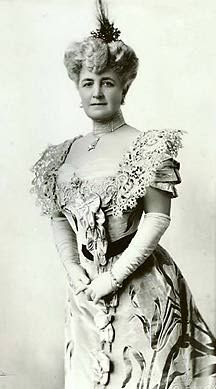
Bertha Honorȇ Palmer (1849 – 1918)

Sarasota’s growth and development benefited immensely from its association with Bertha (Honorȇ) Palmer, widow of Chicago millionaire Potter Palmer. In 1910, newspaper headlines informed the world that Mrs. Potter Palmer had acquired 75,000 plus acres in the vicinity of Sarasota and Venice, along Florida’s famed Gulf of Mexico. By the time of her death in 1918, Bertha had, in eight years, nearly doubled the value of the estate that had been left to her by her husband. But even before her husband’s death, Bertha had herself become an accomplished individual. She was by no means simply a wealthy Widow.

A Triumphant World’s Fair:


The Inter Ocean, Chicago, Illinois 1 November 1893

“In the organization of the board,” reported an extensive review of the management of Chicago’s 1893 World Exposition, “it was generally conceded that the election of Bertha Honorȇ Palmer as President of the Board of Lady Managers was the wisest choice that could be made.” The independent review spoke highly of the achievements of the Board that had been formed in 1890, and went on to say, “she came to her position with very thorough social training, with tact and self-mastery that have been invaluable.”

“She is of Southern extraction,” said the World’s Fair review of Bertha Honorȇ Palmer, “being born in the city of Louisville. She was educated in a convent at Georgetown, D. C., and is still remembered there as a student of brilliant promise. She is a fine linguist and a pleasing conversationalist, two accomplishments that have been of the greatest advantage.”

In her role as President of the Board of Lady Managers, Bertha Honorȇ Palmer traveled to Europe to promote involvement by other countries in the Exposition. “At the time of the opening exercise last May (1892),’ the review article stated, “the board had the satisfaction of seeing represented in the Woman’s Building a valuable and complete showing from Great Britain, France, Germany, Austria, Russia, Italy, Mexico, Brazil, Siam, Denmark, Sweden, Belgium, Holland, and Greece.”

A Woman’s Building at Chicago’s World Fair:


The Woman's Building, Chicago World's Fair of 1893

Says the National Park Service website of the Board of Lady Managers for the Chicago 1893 Exposition: “During the planning stage, some civically engaged, upper-class women pressured Exposition administrators for greater representation. As a result, Congress authorized and funded the Board of Lady Managers. The 117 Board members were the first women who served in an official capacity at a world’s fair. Yet, women were still excluded from any major decision-making. Socialite Bertha Honoré Palmer served as the Board’s president.” One thing the NPS failed to say about the accomplishments of Bertha and her Board of Lady Managers is best summarized by an 1893 statement by a review of the Exposition itself:

“Mrs. Palmer’s efforts to exploit The Fair in Europe were not surpassed in zeal and perseverance by those which had such force and weight with the Congress of the United States. It is universally admitted that no one member of the National Commission or Directory exercised with that difficult body one-tenth the influence which Mrs. Palmer exerted through the force of her own personality.”


“It is a Lovely and Charming Place.”

In late fall 1916, while motoring south from Chicago toward Sarasota, Bertha Honorȇ Palmer detoured onto the Central Branch of the newly established Dixie Highway to pay a visit to Winter Park, a town she described that November as a lovely and charming place. The Widow Palmer had come to Orange County on both business and pleasure.

Earlier in 1916, Bertha Palmer had been elected the First Vice-President of the Florida Livestock Association, and so one reason for her driving to Central Florida was to visit with Dr. William Fremont Blackman. Retired from his position as President of Rollins College, and not yet ready to publish his acclaimed History of Orange County, Dr. Blackman had been elected President of the Florida Livestock Association at the same meeting that February. And so, among other places in Central Florida she planned to visit, Mrs. Palmer toured Dr. Blackman’s 4,000 acres Wekiwa Ranch on the St. Johns River. Afterwards, she visited the Willett Ranch at Lake Maitland to “view the thoroughbred hogs that Mr. Willett was making a specialty of,” prior to proceeding toward her winter residence near Venice. Bertha Honorȇ Palmer was by no means a passive Florida rancher.

Nor did Bertha Honorȇ Palmer likely appreciate how historic her journey through Central Florida had been. After crossing the St. Johns River at Lake Monroe, her motoring would have taken her into downtown Sanford, where in the 1880s, arriving settlers the likes of Piers E. Warburton would have disembarked from steamers arriving from Jacksonville. Piers Warburton came in 1883 and settled at Maitland before moving further south to lay the groundwork for a town of Sarasota.

Driving the new Dixie Highway in 1916, Bertha would have passed through Longwood, where in the early 1880s, the Longwood Whisper was being published by a man who was to become known as the “Dean of South Florida Press,’ the very “Dean” who later published Sarasota’s first-ever newspaper. Next, after departing the lovely and charming town of Winter Park, Bertha Honorȇ Palmer would have crossed a narrow strip of land separating Lakes Ivanhoe and Highland on her way into Orlando, where roadside was located the one-time residence of Joseph H. Lord, the very person who had enticed Bertha to bring much of her vast wealth to Sarasota.

Look for my booth at Sarasota's

History Day in the Park

Phillippi Estate Park

March 25, 2023 from 10 AM to 5 PM

Florida history is chock full of fascinating individuals and intriguing happenstances, a shared heritage between Orlando and Sarasota included. Railroads of the 1880s became the initial link – a means by which to reach Tampa Bay from the steamboat docks at Sanford. And although that was before Bertha Honorȇ Palmer’s time, it was the precise time for a young Irish lass named Winifred A. Hodgson to make the long journey from England to Sarasota. 

Florida history indeed includes many of the most fascinating individuals ever – men and women alike. You read a bit about Bertha, was one such founder, and Winifred, she will be next in this March series.

To Sarasota, with Love, Orlando

Our Shared Heritage


By Richard Lee Cronin

Pick up a signed copy at History Day in the Park

Or, Buy it today at Amazon

https://www.amazon.com/author/richardcronin