Tuesday, April 14, 2020

Cowboys & Lawyers - Part 10 - Thomas E. Wilson


Honorable Thomas Emmett Wilson

Orange Boulevard of Seminole County, a busy rural thoroughfare today serving bedroom communities west of downtown Sanford, Florida, was once a roadbed for the train that opened-up the wild west – Central Florida’s wild west that is. Few obvious signs remain today of 19th century cities founded along the route of Orange Belt Railroad, but glaring evidence does indeed exist.

After crossing State Road 46 heading south, Orange Boulevard intersects with Wilson Road, an east-west artery memorializing a leading Orange County Attorney of the 1870s and 1880s, the Honorable Thomas Emmett Wilson. Head east off Orange Boulevard a short distance on Wilson Road and you will soon come to yet another memorial for the man, Emmett Street.

Turn south at Wilson and Emmett and note the two arteries of yesteryear, 5th Street and 1st Street, both lonely remnants of the 1880s town of Sylvan Lake – a railway stop on the Orange Belt Railway – a town founded by Attorney Thomas Emmett Wilson.


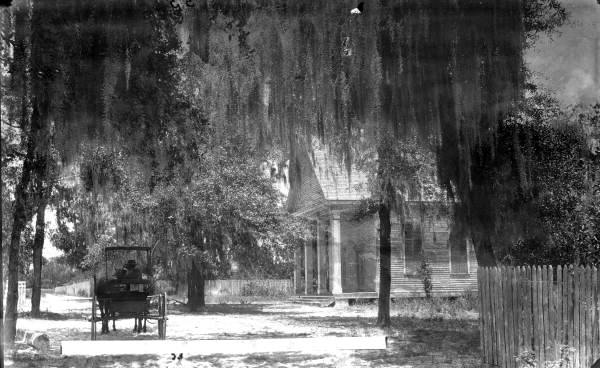
Residence of Attorney Thomas E. Wilson

Railroad tracks laid down by Orange Belt Railway are long gone, and the land in these parts has, since 1913, been part of Seminole County. Much of the rich history of these rural communities though had been forgotten – despite survival of hints in the form of monikers that long ago identified railroad towns such as Sylvan Lake, Paola, Island Lake, Glen Ethel and even Palm Springs. 

I myself first learned of the historic significance of such ‘place names’ a dozen years ago, and I profiled each, as well as towns Altamont (no ‘e’), Forest City, Lakeville, Clarcona, Crown Point, Winter Garden and Oakland, in my second book – still popular today – CitrusLAND: Ghost Towns & Phantom Trains (Second Edition released in 2015).

 Buy it now at Amazon

CitrusLAND: Ghost Towns & Phantom Trains
True-life central Florida pioneers, and Florida’s Freeze of 1894-95
Click on cover to read my 5 Star review and/or to buy it now at Amazon

Any biography of Thomas Emmett Wilson however would need to point out that the founding of his town of Sylvan Lake was easily the least of this bachelor’s many accomplishments. The end of the line for Orange Belt Railroad, for example, was St. Petersburg – on the Gulf Coast - a town founded by the railway’s founder, Russian immigrant Peter A. Demens. Thomas E. Wilson's client was the Orange Belt Railway, and at the founder’s direction, Wilson filed the town charter establishing the city of St. Petersburg, Florida.


Born 1847 at Putnam County, New York, Wilson came to Florida in the early 1870s as a Veteran of the Civil War. He had served four years with New York’s 8th Calvary before being admitted in 1868 to the New York Bar. As an ex-Calvary officer, he was quite comfortable traveling rough dirt roads of central Florida selling his legal services via horseback. Wilson served as State Attorney from 1873 through 1877, and then, in 1880, was the local Attorney in the organization of South Florida Railroad. He was also the lawyer for Florida Midland Railway, and in the mid-1880s for the Orange Belt Railway 

In addition to owning more than four thousand acres scattered throughout Orange County, he had also traveled the world. Wilson’s around-the-world expedition took him to Australia, New Zealand and, said a biography appearing in the Sanford’s Gate City Chronicles of 1910, “to the borders of the Antarctic Ocean, sailing around the Cape of Good Hope.  
   
Thomas E. Wilson was 54 years old when he married his neighbor and stenographer, Elizabeth A. Fox. They had no children. Attorney Wilson died at Sanford in 1924, at the age of 77.

And so it was no surprise that, while researching for my next book on central Florida's fascinating history, that I once again stumbled upon Attorney Thomas Emmett Wilson. That, however, is a story for later this year.

Cowboys & Lawyers will continue while I continue to research and write my next book - due out later this summer. In the meantime, stay safe and wealth - and read a good book or two.


Visit CroninBooks.com to view your central Florida history store.


Wednesday, March 18, 2020

Sarah of Lake Conway - Conclusion


Sarah of Lake Conway
Solving the Mystery of Orlando’s Origin
A 2020 Women’s History Month Special Edition Blog

A New York City resident in 1874 when she purchased land at Mellonville on Lake Monroe, Mrs. Sarah C. Taylor had remained, until now, an elusive link in learning the truth about the founding of Orlando. Fact is, we simply did not know! So, in my book First Road to Orlando, I suggested my version after first analyzing the many 'other' long-standing versions. I did not know of Sarah at that time, but I do believe her fascinating story compliments that of my earlier theory.

McDougal’s Hammock of Lake Conway:


1879 Lake Conway area map by E. R. Trafford
McDougal's Hammock was that land between the middle and lower basins above
Note the heavy line showing the 'trail' that a railroad would follow in 1881

Mellonville, now a ghost town, was still a port of entry in 1874, although its neighbor, the port of Sanford, was becoming a serious challenger to assuming the title, “Gateway to Orange County”. Sarah decided to buy her first Orange County lot at Mellonville.  Less than a year later, solely on her own, she purchased one hundred acres on Lake Conway, (see above map) 30 long sand rutted miles south of Mellonville. It was then a full-day’s journey or more from Lake Monroe to Lake Conway.

A portion of Sarah’s property on Lake Conway was what pioneer and historian Will Wallace Harney referred to as McDougal Hammock. “It seems to be an island hill,” wrote Harney in March of 1876, “a soft mass of verdure, light green, deepening in shadow and rising to a soft knoll.” John McDougal, a native of Scotland, had been a long-time Tallahassee merchant prior to the Civil War. His central Florida land speculating days ended in 1874, by selling his Lake Conway hammock to Sarah C. Taylor of New York City.

Florida history, it seems, had taken a Manhattan sabbatical following the Civil War! That’s why Florida native Sarah C. Taylor was living in New York City in 1870. Sarah had married John M. Taylor on 15 September 1864, relinquishing at that time her maiden name - Broome. At the time of the 1870 census, Sarah was a New Yorker, living with two siblings, Thomas H Broome and sister Julia, and their cousin, John Dozier Broome (future Deland Attorney), and her uncle - a well-known Floridian, James E. Broome, an ex-Governor of the State of Florida.


Panhandle Broome’s:

Flashback 20 years to 1850, and six-year old Sarah lived with her parents in Florida’s Panhandle, along with two older brothers: Robert W. Broome and George Knox Broome. The family lived at Madison, where Benjamin F. Whitner, Jr. also lived., Ben was the young man who first surveyed most all of South Orange County in the 1840s – and even owned nearly 300 acres of the county by 1860, as I pointed out in my book, Beyond Gatlin: A History of South Orange County

Benjamin Whitner, Jr. is also referred to as central Florida’s “Architect” in Chapter 7 of my latest book, Will Wallace Harney: Orlando’s First Renaissance Man, commissioned by and for the Pine Castle Historical Society.


More than a biography of a man, this is the history of his beloved Pine Castle 

While Sarah lived at Madison, Florida in 1850, Surveyor Whitner’s father, Ben Sr., was living at Tallahassee. He was the neighbor of James E. Broome – brother of Sarah’s father, John S. Broome. James E. Broome was getting ready to run for the office of Florida Governor. He won, and in October 1853, as Sarah turned 9, her uncle James became Governor of Florida. 

On October 5, 1857, the last day in office for Governor James E. Broome, Benjamin F. Caldwell of Talladega, Alabama – on that exact same day – signed a deed gifting four (4) acres of Orange County land – at the Village of Orlando - for a county courthouse. Governors make a lot of last minute decisions on their last day in office - decisions such selecting a controversial location for a county seat.

Then came the Civil War, and everything, including central Florida history, was put on hold. It was because of this protracted War and Reconstruction Period that a lot of history was forgotten!


Broome’s in Orlando’s Closet:

Now, back to 1870, Sarah’s two older brothers lived in Florida while she lived with her uncle and younger siblings in New York City. Her brother George lived at Gainesville, and brother Robert, an attorney, lived at Lake City. The next-door neighbor of Robert W. Broome was William Wallace McCall, also an attorney.

As already stated, Sarah bought her Mellonville land in February of 1874. Two months later, in April 1874, Lake City Attorney William Wallace McCall made his first of several land purchases at the village of Orlando. Then, on January 14, 1875, Sarah C. Taylor, by that time a resident of Gainesville, Florida, purchased her one hundred plus acres at Lake Conway.

Six months later, on June 3, 1875, Sarah’s brother, Attorney Robert W. Broome of Lake City, arrived at Village of Orlando and called to order the first of several meetings of landowners. Will Wallace Harney, in a published article dated September 8, 1875, reported: “And so Orlando has a charter, and in addition to its handsome courthouse has a Mayor, Council, and ordinances.”


Village of Orlando, Seat of Orange County, circa 1870s. 

Employed as City Attorney for a time in 1875, Robert W. Broome had also served as Chairman of the committee to Incorporate Orlando. Robert then vanished, and by 1880, Robert’s wife was identifying herself as a Widow.

A Colonel & the J. P. & M bonds:

Sarah C. (Broome) Taylor was a land speculator at a time land speculating was primarily a male occupation. Why else would a New Yorker acquire a hundred wilderness acres south of Orlando but then settle at Gainesville the very next year? Was it coincidental that Sarah bought land south of Orlando – within months of her Attorney brother arriving to rescue Orange County’s 18 year-old county seat?

Sanford desperately wanted the title of County Seat in 1874, and time was clearly running out for a floundering little village of Orlando. Timing was right to finish the job Broome & family had begun in the 1850s. Broome was not alone in the origins of Orlando - but they were an important link to the town's survival

How did the New York residents know what was happening back home? In 1873, in New York City, the Great Southern Railroad of Florida was organized. Organized with $9,000,000 in bonds, the charter called for 450 miles of rails, running from Nassau County in the north to Monroe County in the south, and Orange County was listed as being in the path of this new railroad. Will Wallace Harney even wrote of a proposed train to cross over his Lake Conway property.

Harney also wrote a novel: “She is a very lovely character indeed, said the lawyer,” in Harney's City Building in the South; “She is here on business.” His novel was about a pretty lady, a lawyer, a planned railroad, and a Colonel. “The Colonel”, wrote Harney, “has a number of J. P. & M bonds.”

Central Florida and New York City might have been separated by many miles in the 1870s, but the New York Herald managed to bring these two very different locales together on January 31, 1874. On that day the newspaper reported on a U. S. Supreme Court case called 'Florida vs. Anderson', a case dealing with the ‘Jacksonville, Pensacola and Mobile Railroad’. Interesting call letters for a railroad - the J. P. & M! Interesting that Harney concluded his Novel with: "so, under the veil of fiction has been told the story of the founding of one American city and county."

Rail service finally reached Orlando in late 1880, and during the summer of 1881, as track was being laid in the direction of Lake Conway, Sarah C. (Broome) Taylor sold her property. It was as if she had decided her Broome family had completed their elder's wishes. Orlando, Florida remained the county seat of Orange County. Ex-Governor James E. Broome died in 1883, while visiting his Attorney son at Deland, Florida.

Sarah of Lake Conway is representative of the remarkable women of 19th central Florida. They had faith in the dream of an American Paradise, but their roles in helping to develop this land often became lost amid so much heart break and disappointment. Central Florida pioneers however were tough and resolute individual – men and women both - and we all benefit from their efforts today.

Colonel Whitner, as Will Wallace Harney always referred to his surveyor friend, died in 1881, the same year Sarah of Lake Conway sold her McDougal Hammock on Lake Conway. The 'Architect' of central Florida had lived to witness iron of the SFRR being laid across his land at Lake Gatlin. Colonel Whitner was survived by his amazing wife, Sarah of Fort Reid, but that, my history friends, is a story for another time.


VISIT CRONINBOOKS.COM

Home of central Florida's remarkable 19th century pioneers
   
 MY COWBOYS & LAWYERS SERIES RETURNS IN APRIL


Wednesday, March 11, 2020

Sarah of Lake Conway


The intriguing Sarah of Lake Conway

Solving the Mystery of Orlando’s Origin

A 2020 Women’s Month Special Edition Blog


Sarah of Lake Conway

I recently stumbled across a fascinating 19th century central Florida lady I’ll call, for the moment, Sarah of Lake Conway. Her married name did not at first set off a red flag for this historian, but if I’ve said it once I’ve likely stated a hundred times – researchers looking to resolve the mystery and intrigue of central Florida history must always look deep into to the genealogy and history of the extraordinary women who assisted in the founding of Florida’s Citrus-Belt.


Sarah of 1874 Lake Conway owned the land inside the red box shown above  

I set out to do a series for Women’s History Month about remarkable frontierswomen named Sarah. There were quite a few such fascinating ladies during the 1870s and 1880s, and while researching for that blog, I stumbled upon another - Sarah of Lake Conway.

This particular Sarah acquired Lake Conway land in two purchases during 1874. I want to stress again the year – it was 1874! Her Lake Conway land was well south of Orlando, even south of the historic homestead where Will Wallace Harney had settled only four years earlier. Travel was still difficult at best, although Harney tells us that by 1874 a stagecoach was running from Mellonville to Orlando during the “winter and spring”.

Today, residents cross Sarah’s 1874 property via the historic Nela Avenue, driving through a neighborhood already rich in history. But remember, Sarah acquired her land long before Nela Avenue was ever laid out, and long before the first house was built on the peninsular separating the middle basin of Lake Conway from the lower.

1874 was the year Harney began building his ‘Pine Castle’. He celebrated Christmas that year by throwing an extravagant party at his new home on Lake Conway. But central Florida had yet to build its first railroad, and dirt trails remained the sole means of access land on Lake Conway. It is not known if Sarah attended Harney's Christmas party that year.

A party from the States,” wrote Harney of an Everglades hunting expedition party from the North, visited him in April 1874, having, “trudged by the Pine Castle”. The dirt path leading from Fort Gatlin south to Lake Tohopekaliga – to the future location of Kissimmee City – was not easily traveled. Still, Sarah of Lake Conway purchased more than a hundred acres on the southwest shore of the lower of three Lake Conway basins.

Having come across this Sarah, I wanted to know why she would have been interested in this remote land?

“Hesperian fables true, If true here only.”         

Fewer than 2,200 courageous souls were residents of 1870 Orange County, and the population didn’t increase all that much in the four years to follow. Our Sarah of Lake Conway did move however, relocating from New York City to Marion County, Florida between 1870 and 1874.

She also expressed interest in Orange County land about that same time. But homestead land was cheap and plentiful all along the 25 plus miles between Fort Mellon and Fort Gatlin, the main artery to access Sarah’s property. In fact, after reaching Fort Gatlin, Sarah still had nearly four miles of dirt trail to “trudge” heading to her parcel.

Why didn’t Sarah of Lake Conway simply buy land – one might inquire – at Port of Mellonville, where passengers disembarked the numerous steamboats coming south on the St. Johns River to the wilderness lands of Orange County? Well, that’s where the Sarah of Lake Conway plot thickens!

Sarah’s first land purchase was in fact at Mellonville. She and a brother Thomas purchased Lot 4 of Block 33 at Mellonville, closing on the land deal February 6, 1874. Again – another important date to remember – February of 1874!

Remember Orlando’s Closet?

I released First Road to Orlando in Second Edition in 2015. A history of how the Fort Mellon to Fort Gatlin military trail evolved into the first road to a remote county seat of Orlando, the book is presented in three parts. War to War (Part One) and Trail of Retired Warriors (Part Two) tells of how Mellonville, Fort Reid, Rutledge, Maitland and a mysterious little village of Orlando were founded. Part Three then analyzes the merits of each of a numerous versions as to how the town of Orlando came to be named.


My last chapter in First Road to Orlando in entitled Broome’s in Orlando’s Closet. I present in that chapter my theory about Orlando’s origin – a version never before told. Detailed facts were laid out in that chapter, although gaps admittedly did exist. A mysterious Attorney arrived at the little village of Orlando in 1874, 18 years after the village had been established as the Orange County seat. The Attorney of 1874 had a fascinating family connection to a Florida Governor of 18 years prior.

Documented proof however was missing. Why the attorney happened to come to Orlando that year couldn’t be documented - leaving room for doubt in my 2015 Orlando origins theory.

And then, a few weeks back, I happened upon Sarah of Lake Conway. This remarkable 19th century lady is the missing link to resolving the amazing origin of Orlando. Next Wednesday, in Part Two of this Two Part Blog, I will introduce you to Sarah and her incredible family - all over again. This time, I'll have the documented evidence to support the theory presented in First Road to Orlando


5 Star Review at Amazon: "Really enjoyed this book. There are so many interesting facts about Florida and the central Florida area and how we are connected to George Washington."

If you enjoy central Florida history, you will love:


As well as my 2017 PCHS Award winning:


NEXT WEDNESDAY: Sarah of Lake Conway
Right here at Rick's Blog

All books are available at Amazon.com


Thursday, February 27, 2020

Cowboys & Lawyers - Part 9 - Robert W. Broome


Cowboys & Lawyers: Part 9
Attorneys of 19th Century Central Florida

A series inspired by Pine Castle Historical Society’s

Will Wallace Harney: Orlando’s First Renaissance Man

By Richard Lee Cronin

Central Florida’s 1875 Mystery Attorney:


Earnest Chapel, Fort Reid (1873)
Named for congregation member Felix W. Earnest

“One must take a buggy and follow the picturesque old Fort Mellon Road among the groves and gardens of a prior generation.” South Florida Railroad (1887)

Arriving at Lake Monroe in the summer of 1875, the Lake City Attorney bypassed the newest Orange County pier at Sanford so he could disembark a mile further east - at the original Fort Mellon pier. Five years prior to his arrival, Attorney Joseph J. Finegan (Part 5) had sold his 12,000 lakeside acres along Lake Monroe’s south shoreline to Henry S. Sanford. In 1875 however, Henry Sanford’s dream of a port city named Sanford was still very much in the early stages of development.

A Sanford Post Office had opened September 9, 1873, three (3) days before a Fort Reid Post Office opened on the 12th of September, 1873. Two entry points therefore were competing in 1875 to become the ultimate Lake Monroe “Gateway” to Orange County.

Mellonville and Sanford would continue to compete for freight and passenger traffic for several more years, but in 1875, the reason the Lake City Attorney chose to come ashore at Mellonville was family. His two siblings, a brother and sister, were partners in a Mellonville town lot – land on the First Road to Orlando. They had purchased the site at Mellonville a year earlier, and this roadside parcel served as the family’s wilderness Oasis, a place to rest after a long river journey to Mellonville, or a place to recoup after a long horseback journey from Orange County’s remote interior seat at Orlando.

Thomas and Sarah, brother and sister of the mystery lawyer from Lake City, are now the latest tantalizing clues in solving Orlando’s 1857 obscure origin, and the city’s subsequent rescue in 1875 from near ghost town status by an out of town Attorney from Florida’s Panhandle.


First Road to Orlando (2015) by Richard Lee Cronin

Southbound from Mellonville to Orlando:

FORT REID:
After mounting up and starting south on the old Fort Mellon to Fort Gatlin Trail, aka the First Road to Orlando, the Lake City Attorney would have passed Earnest Chapel (see photo above and cover of First Road to Orlando), gifted to Trustees of the new church in 1873. A centerpiece for the village of Fort Reid, this chapel served as the main house of worship for a town that had grown around the 1840s military post of the same name.

Since 1870, Fort Reid had also been home to Alaha Chaco Hotel, or ‘Orange House’ for those not familiar with the Indian language. Considered the finest in the county, Orange House Hotel was the first-ever, free-standing hotel built south of Lake Monroe. Financing for the hotel came from Attorney William M. Randolph of New Orleans (Part 7). As the Lake City Attorney passed this way in 1875, citizens of Fort Reid were also looking forward to the completion of their first schoolhouse - Orange High School of Fort Reid.

TUSKAWILLA:

At Mile 6 of the First Road to Orlando the Lake City Attorney crossed Soldiers Creek, where for the next five or so miles the old trail crossed over a corner the 8,133 acre Mitchell Grant. Platted in 1874 by Attorney Daniel Randolph Mitchell of Georgia (Part 1), the Tuskawilla subdivision was, in 1875, the largest development project in all of Orange County. The trail exited Attorney Mitchell’s property at Ten Mile Lake, south of the homestead of Attorney George B. Hodge of Longwood.

MAITLAND:

The next several miles south of the old trail – aka First Road to Orlando, were lonely, and the Lake City Attorney likely didn’t see another living soul until reaching the thriving village of Lake Maitland. Many a lakefront homesite offered in 1875 by town founder Christopher C. Beasley had already been sold. And like that of Fort Reid, citizens of Lake Maitland were also looking forward to completion of their Maitland High School that year as well.


19th Century Maitland street scene (c 1880s) courtesy FloridaMemory

Beasley’s town of Lake Maitland had served as a respite for trail trekkers long before Beasley established his post office in January 1872. It’s possible the Lake City Attorney even stopped at Lake Maitland to visit a fellow Florida Panhandler. Attorney Bolling Baker had only recently relocated to Orange County from Tallahassee and, in 1875, was an active partner in a group trying to organize a Lake Monroe to Orlando Railroad.

Their proposed train was by no means a new idea - and would of course pass through Beasley’s village of Lake Maitland.

ORLANDO:

The Lake City Attorney arrived at Orlando (Mile 22) of the trail by June 23, 1875. It is not known for certain if he travelled further south, but he did have good reason to make such a journey. Fort Gatlin (Mile 28) was the original trails end, but the Lake city Attorney may well have travelled Beyond Gatlin! Had he followed the trail west around Lake Gatlin, passing the 160 acres owned by Attorney Will Wallace Harney (Part 8), the Lake City Attorney would have then come to 45 acres owned by his sister Sarah. She had purchased the Lake Conway land on the 14th of January 1875, only six months before the Lake City arrived at Orlando. (Neither of the three siblings ever homesteaded land in Orange County, but their brief presence on the old forts trail – despite each being for largely forgotten by history – changed history forever!)

CALLING THE MEETING TO ORDER:

On the evening of June 23, 1875, Attorney Robert W. Broome of Lake City, Florida, having travelled to the Orange County seat on designated business, assembled area property owners for the purpose of incorporating Orange County’s 18 year old seat of government. Broome, serving as Chairman of the meeting, steered the little town of Orlando toward a corporate charter.


1875 Orlando Incorporation Meeting (partial) - R. W. Broome Chairman

So, why then did Attorney Robert W. Broome travel from Lake City to rescue Orlando?

THE WHY?

Chapter 19 of my First Road to Orlando is called ‘Broome’s in Orlando’s Closet’. Along with family information in Chapter 18, I offered my reasoning into how Orlando had been named. A mystery for the ages, Robert W. Broome’s journey to Orange County in 1875 - specifically to incorporate a village founded in 1857 - made a good argument for my case.

Now, learning of Robert’s brother Thomas and sister Sarah – they lend even more support the conclusions of First Road to Orlando.      

On Friday, March 13, 2020, in the first of two Women’s 2020 History Month blogs, you will meet Robert’s sister, Sarah of Lake Conway. Meanwhile, Cowboys & Lawyers will take a little breather:

March 13, 2020: Sarah of Lake Conway

March 27, 2020: Sarah of Fort Reid

April 3, 2020 Cowboys & Lawyers returns with Part 10

Visit CroninBooks.com


Thursday, February 20, 2020

Cowboys & Lawyers - Part 8 - Will Wallace Harney


Cowboys & Lawyers: Part 8
Attorneys of 19th Century Central Florida

A series inspired by Pine Castle Historical Society’s

Will Wallace Harney: Orlando’s First Renaissance Man

By Richard Lee Cronin


The Honorable William Wallace Harney of Lake Conway

Special Pine Castle Pioneer Days 2020 Edition


Will Wallace Harney

Saturday, February 22 & Sunday, February 23

Cypress Grove Park, 290 W. Holden, Orlando

Saturday 9 AM to 5 PM; Sunday 10 AM to 4 PM

Attorney Archer Phillips of 1869, said Will Wallace Harney, “was a graduate of law, he could put up his shingle,” meaning an ‘Attorney-at-Law’ sign, “but for some time business would seek more experienced advisers.” A member of Kentucky’s State Bar, Archer Phillips had relocated to central Florida at a time when only 1,170 residents lived in all of Orange County. How many lawyers, one might logically ask, could earn a living in a county with fewer than 1,200 potential clients?


Will Wallace Harney Novelette (Second line from bottom) 

Phillips apparently realized early on that legal professionals, in large numbers, had taken interest in Harney’s new homeland. Having left the love of his life back in the Blue Grass State, Attorney Archer Phillips had traveled to Florida alone. “It was part of his imaginative character that he selected Florida. It is the only State,” Harney wrote, “which its origin and history has the air of romance. It lies on our western Mediterranean. Stern Spanish bigots, heroic statesmen and soldiers, rough naval adventurers, cruel speculators, have alike pictured it as the El Dorado.”

Archer planned to have Judith join him in Florida later – after he had settled in and built a home for her. Perhaps, while writing about Attorney Archer, author Will Wallace Harney had wished he had done the same. A graduate of law school as well, Harney had buried the love of his life – Mary St. Mayer (Randolph) Harney – within weeks of their arrival at Orange County.

Attorneys Archer Phillips and William Wallace Harney clearly had a lot in common. In fact, the biggest difference between the two was reality. You see, Harney was a real “character”, whereas Attorney Archer Phillips was a figment of Will Harney’s imagination.

Published by Southern Bivouac Magazine in 1886, Archer Phillips, much like Will Harney, had departed Kentucky for the wilds of Florida in 1869. Was Archer only a fictitious character? “If this experiment of giving up all the advantages of education and training was a mistake, it was terrible one!” Archer Phillips questioned the wisdom of moving to Florida. Or had Will Harney himself questioned the wisdom of his move south?


Harney's Historic Pine Castle

Harney’s Lake Conway homestead was established 150 years ago this month. Arriving at Fort Reid during the last days of 1869, he then buried his true love days after the dawn of the new decade. The year 1870 was the start of a central Florida Renaissance, the year Harney settled on the banks of Lake Conway, and the year he began clearing and grubbing his homestead. Archer Phillips, wrote Harney, also began clearing his land in 1870. “All about him were the marks of his labor. He had been at it all morning and had cleared a space about the size of a family dining table.”

William Wallace Harney had practiced law at Louisville, Kentucky prior to joining his family’s newspaper business in that same city. His legal expertise - combined with editorial skills – then made it possible to both identify and write about Florida’s rampant land fraud. Harney wrote of such fraud soon after arriving in Florida. He continued to expose the “robbery and extortion practiced by Federal and carpet-bag officials upon the people of the Southern States.”


Another Attorney Will Harney wrote about was Colonel Alton, a self-described old-fashioned lawyer and politician. In February 1869, Attorney Alton, wrote Harney, met a Southern Belle in Tallahassee who needed a lawyer having political clout. Alton was happy to assist. “She is here on business. She has some claims that may require legislative action.”

City Building in the South, penned by Will Wallace Harney, introduced yet another client of Mr. Alton’s. And yes, Alton is also a fictitious character, as is the other client, Mr. Basil Rankin.
In a four-part series, Harney tells of a railroad, the Lopez Land Grant, and a voyage in search of land belonging rightfully to a ‘Southern Belle’. “The scenery on the St. Johns; the linked lakes, like a string of beads, the innumerable shades of green,” and a landing, “Melonville, or Millionville, as it was called, seemed to be the general entry point.”

Two Novelettes written by Harney speak of Attorneys busy at work developing central Florida’s vast wilderness. Novels? Perhaps to an extent, but the very last paragraph of Will Harney’s 1887 City Building in the South concludes with this statement: “So, under the veil of fiction, has been told the story of the founding of one American city and county.”

Eight installments of this series have thus far introduced a plethora of legal professionals, lawyers and judges who, in the 19th century, had been intent on transforming a wilderness into major new settlements. This weekend, Pine Castle Pioneer Days provides a perfect setting in which we can celebrate the eventual success of those amazing legal professionals.

COME CELEBRATE AT CYPRESS GROVE PARK!

Next Friday, on the eve of Women’s History Month, you will meet an Attorney who arrived in central Florida on a specific mission. He did not come as a settler. He did homestead. His reason for coming to Orange County was to rescue its county seat. This lawyer from Lake City came to save the settlement of Orlando from extinction. That’s next Friday, and then, a week later, in a special Women’s History Month blog, you will meet his little-known sister – a long-overlooked central Florida frontierswoman I call - Sarah of Lake Conway – quite likely the most convincing key to finally solving the long-standing mystery of Orlando’s origin!

IF YOU LIKE HISTORY, YOU WILL LOVE PIONEER DAYS!
AND ADMISSION IS FREE THIS YEAR!

This year, Pine Castle Pioneer Days is celebrating the 150th Anniversary of the arrival of Will Wallace Harney and William M. Randolph to central Florida. Cronin Books is once again having a booth – our third year. Look too for my article in the Pioneer Days Magazine, you can picka copy at the front gate – and its free also.

Will Wallace Harney: Orlando’s First Renaissance Man


By Richard Lee Cronin

Commissioned by Pine Castle Historical Society

More than a biography of one pioneer – this is a biography of Orange County


I invite you as well to stop at the Pine Castle Historical Society ‘History Tent’, where every hour on the hour, from 10 AM to 3 PM Saturday and Sunday, guest speakers will present on a variety of fascinating topics.

1 PM Saturday & Sunday
 Richard Lee Cronin
A Tribute to 150 years of Orange County Educators

Be sure to stop by my CroninBooks.com booth and say hello. I’d love to talk central Florida history with you.