Thursday, February 20, 2020

Cowboys & Lawyers - Part 8 - Will Wallace Harney


Cowboys & Lawyers: Part 8
Attorneys of 19th Century Central Florida

A series inspired by Pine Castle Historical Society’s

Will Wallace Harney: Orlando’s First Renaissance Man

By Richard Lee Cronin


The Honorable William Wallace Harney of Lake Conway

Special Pine Castle Pioneer Days 2020 Edition


Will Wallace Harney

Saturday, February 22 & Sunday, February 23

Cypress Grove Park, 290 W. Holden, Orlando

Saturday 9 AM to 5 PM; Sunday 10 AM to 4 PM

Attorney Archer Phillips of 1869, said Will Wallace Harney, “was a graduate of law, he could put up his shingle,” meaning an ‘Attorney-at-Law’ sign, “but for some time business would seek more experienced advisers.” A member of Kentucky’s State Bar, Archer Phillips had relocated to central Florida at a time when only 1,170 residents lived in all of Orange County. How many lawyers, one might logically ask, could earn a living in a county with fewer than 1,200 potential clients?


Will Wallace Harney Novelette (Second line from bottom) 

Phillips apparently realized early on that legal professionals, in large numbers, had taken interest in Harney’s new homeland. Having left the love of his life back in the Blue Grass State, Attorney Archer Phillips had traveled to Florida alone. “It was part of his imaginative character that he selected Florida. It is the only State,” Harney wrote, “which its origin and history has the air of romance. It lies on our western Mediterranean. Stern Spanish bigots, heroic statesmen and soldiers, rough naval adventurers, cruel speculators, have alike pictured it as the El Dorado.”

Archer planned to have Judith join him in Florida later – after he had settled in and built a home for her. Perhaps, while writing about Attorney Archer, author Will Wallace Harney had wished he had done the same. A graduate of law school as well, Harney had buried the love of his life – Mary St. Mayer (Randolph) Harney – within weeks of their arrival at Orange County.

Attorneys Archer Phillips and William Wallace Harney clearly had a lot in common. In fact, the biggest difference between the two was reality. You see, Harney was a real “character”, whereas Attorney Archer Phillips was a figment of Will Harney’s imagination.

Published by Southern Bivouac Magazine in 1886, Archer Phillips, much like Will Harney, had departed Kentucky for the wilds of Florida in 1869. Was Archer only a fictitious character? “If this experiment of giving up all the advantages of education and training was a mistake, it was terrible one!” Archer Phillips questioned the wisdom of moving to Florida. Or had Will Harney himself questioned the wisdom of his move south?


Harney's Historic Pine Castle

Harney’s Lake Conway homestead was established 150 years ago this month. Arriving at Fort Reid during the last days of 1869, he then buried his true love days after the dawn of the new decade. The year 1870 was the start of a central Florida Renaissance, the year Harney settled on the banks of Lake Conway, and the year he began clearing and grubbing his homestead. Archer Phillips, wrote Harney, also began clearing his land in 1870. “All about him were the marks of his labor. He had been at it all morning and had cleared a space about the size of a family dining table.”

William Wallace Harney had practiced law at Louisville, Kentucky prior to joining his family’s newspaper business in that same city. His legal expertise - combined with editorial skills – then made it possible to both identify and write about Florida’s rampant land fraud. Harney wrote of such fraud soon after arriving in Florida. He continued to expose the “robbery and extortion practiced by Federal and carpet-bag officials upon the people of the Southern States.”


Another Attorney Will Harney wrote about was Colonel Alton, a self-described old-fashioned lawyer and politician. In February 1869, Attorney Alton, wrote Harney, met a Southern Belle in Tallahassee who needed a lawyer having political clout. Alton was happy to assist. “She is here on business. She has some claims that may require legislative action.”

City Building in the South, penned by Will Wallace Harney, introduced yet another client of Mr. Alton’s. And yes, Alton is also a fictitious character, as is the other client, Mr. Basil Rankin.
In a four-part series, Harney tells of a railroad, the Lopez Land Grant, and a voyage in search of land belonging rightfully to a ‘Southern Belle’. “The scenery on the St. Johns; the linked lakes, like a string of beads, the innumerable shades of green,” and a landing, “Melonville, or Millionville, as it was called, seemed to be the general entry point.”

Two Novelettes written by Harney speak of Attorneys busy at work developing central Florida’s vast wilderness. Novels? Perhaps to an extent, but the very last paragraph of Will Harney’s 1887 City Building in the South concludes with this statement: “So, under the veil of fiction, has been told the story of the founding of one American city and county.”

Eight installments of this series have thus far introduced a plethora of legal professionals, lawyers and judges who, in the 19th century, had been intent on transforming a wilderness into major new settlements. This weekend, Pine Castle Pioneer Days provides a perfect setting in which we can celebrate the eventual success of those amazing legal professionals.

COME CELEBRATE AT CYPRESS GROVE PARK!

Next Friday, on the eve of Women’s History Month, you will meet an Attorney who arrived in central Florida on a specific mission. He did not come as a settler. He did homestead. His reason for coming to Orange County was to rescue its county seat. This lawyer from Lake City came to save the settlement of Orlando from extinction. That’s next Friday, and then, a week later, in a special Women’s History Month blog, you will meet his little-known sister – a long-overlooked central Florida frontierswoman I call - Sarah of Lake Conway – quite likely the most convincing key to finally solving the long-standing mystery of Orlando’s origin!

IF YOU LIKE HISTORY, YOU WILL LOVE PIONEER DAYS!
AND ADMISSION IS FREE THIS YEAR!

This year, Pine Castle Pioneer Days is celebrating the 150th Anniversary of the arrival of Will Wallace Harney and William M. Randolph to central Florida. Cronin Books is once again having a booth – our third year. Look too for my article in the Pioneer Days Magazine, you can picka copy at the front gate – and its free also.

Will Wallace Harney: Orlando’s First Renaissance Man


By Richard Lee Cronin

Commissioned by Pine Castle Historical Society

More than a biography of one pioneer – this is a biography of Orange County


I invite you as well to stop at the Pine Castle Historical Society ‘History Tent’, where every hour on the hour, from 10 AM to 3 PM Saturday and Sunday, guest speakers will present on a variety of fascinating topics.

1 PM Saturday & Sunday
 Richard Lee Cronin
A Tribute to 150 years of Orange County Educators

Be sure to stop by my CroninBooks.com booth and say hello. I’d love to talk central Florida history with you.

Thursday, February 13, 2020

Cowboys & Lawyers - Part 7 - Attorney William M. Randolph

Cowboys & Lawyers: Part 7
Attorneys of 19th Century Central Florida

A series inspired by Pine Castle Historical Society’s

Will Wallace Harney: Orlando’s First Renaissance Man

By Richard Lee Cronin

The Honorable William Mayer Randolph of #Fort-Reid & Fort Gatlin

Far too many noteworthy pioneers were neglected by chroniclers of Central Florida’s incredible 19th century history. One such long-overlooked Citrus-Belt founder was Attorney William Mayer Randolph. So admired by his peers was Randolph, that upon his death, the criminal and civil courts of New Orleans recessed as a memorial to their good friend and jurist. Even the Supreme Court of New Orleans shuttered its doors, and newspapers of that city set aside entire pages to report the man’s passing.


Randolph Street at Lake Conway, Harney Homestead, Pine Castle, Florida

Central Florida historians have casually mentioned his name, yet much like that of his friend and partner, Surveyor Benjamin F. Whitner II, the accomplishments of each have been overlooked, and their vital roles in the formative years of America’s Paradise seem to have been forgotten.

The Randolph family does have two Central Florida roadways named in their honor, one at each end of the historic Fort Mellon to Fort Gatlin trail. To truly do justice to both men however, the I-4 corridor of today could in fact be re-christened as the Randolph-Whitner Corridor.


Attorney William M. Randolph practiced law at New Orleans, Louisiana, and died at Vaucluse, Virginia. But at the time of his death, Randolph was planning to retire at Fort Gatlin. A son and daughter had planned to settle on nearby Lake Conway, and his wife Mary and another daughter had taken up residence at Fort Reid, as the opposite end of the trail.


Randolph Street of Fort Reid (Sanford) 

Published memorials in New Orleans papers celebrated the man’s life. The memorial told of his lifetime achievements, beginning with his birth at Virginia’s Cumberland County in 1815, to the young man’s early education and training at West Point Academy. At an early age Randolph left the military and took up law, mentoring, said the memorial, under his uncle, the honorable Judge William Randolph. He departed his birth state to open a law firm at Tallahassee, in Florida’s Panhandle. He later moved to Kentucky and eventually New Orleans.

Attorney Randolph’s biographical sketch filled an entire page, detailing his triumphs in life before telling of how he died after a long painful death at Vaucluse, Virginia. In closing, the obituary memorial added: “Far off in Florida, beneath whose stately pines he now rests, there was a daughter whose very being was enfolded in her worship of her father.”

The “stately pines” were those of the Randolph family cemetery at Fort Gatlin, five miles south of Orlando. The daughter was that of Mary St. Mayer (Randolph) Harney, the deceased wife of Attorney Will Wallace Harney, Lake Conway homesteader and founder of Pine Castle, Florida. Harney’s wife had been buried atop Gatlin Hill only days after the family’s move to Florida.

William M. Randolph is “The Lawyer” of Chapter 8

Will Wallace Harney: Orlando’s First Renaissance Man

Arriving in the final days of 1869, William Mayer Randolph partnered in building the first-ever free-standing hotel south of Lake Monroe. Orange House Hotel was the first built in a land now possession well in excess of a hundred thousand hotel rooms. Located at Fort Reid, Mile Marker 1.5 of the Fort Mellon to Fort Gatlin Road, the historic Orange County hotel, now in Seminole County, within days of opening in 1870, hosted an equally historic railroad meeting.

Called to order March 3, 1870 by Judge John W. Price of Enterprise, seventeen organizers came together with the intent to organize the Upper St. Johns, Mellonville, Tampa and South Florida Railroad. Among an impressive roster of organizers was Attorney William Mayer Randolph, Attorney Joseph J. Finegan (see Part 6), Attorney Daniel R. Mitchell (see Part 1), Judge James M. Baker, and Central Florida’s first Surveyor, Benjamin F. Whitner, to name but a few.


William M. Randolph owned land at Fort Gatlin as well. The Randolph’s accumulated in excess of 300 acres adjoining the fortress and Surveyor Whitner’s property, and other Randolph family members became Fort Gatlin landowners as well.

The extent of Attorney Randolph’s connection in the original development of a Lake Monroe to Tampa Bay corridor was cut short by an extended illness followed by his death in 1876.
I had the privilege to tour Vaucluse, the vey home where William Mayer Randolph died in 1876. Today a bed and breakfast, one upstairs bedroom is aptly named “The Randolph Bedroom”. The exterior of the restored 1785 William Strother Jones Manor House below was included as well as an Exhibit in ‘Beyond Gatlin: A History of South Orange County’, my award-winning history of the land south of Fort Gatlin, released in 2017.


The William Strother Jones Manor House
Vaucluse, Frederick County, Virginia


Beyond Gatlin: A History of South Orange County
2017 HISTORIAN AWARD
Recipient of Pine Castle Historical Society’s

Ironically, legal issues prevented Attorney Randolph and partners from building their railroad, which would in turn encourage development along the route of their proposed railroad. Others were credited with turning the dream into reality a decade later, but Will Wallace Harney, and eyewitness to the real story, proclaimed the two most important central Florida pioneers to be Randolph and Whitner.

ADMISSION TO PIONEER DAYS IS FREE THIS YEAR!

This year, Pine Castle Pioneer Days is celebrating the 150th Anniversary of the arrival of Will Wallace Harney and William M. Randolph in central Florida. Cronin Books will once again have a booth – our third year. Look for my article in the Pioneer Days magazine explaining why this remarkable event of 150 years ago is so very important to the history of central Florida.


Will Wallace Harney: Orlando’s First Renaissance Man
By Richard Lee Cronin
Commissioned by Pine Castle Historical Society

More than a biography of one pioneer – this is a biography of Orange County


I invite you as well to stop in at the Pine Castle Historical Society ‘History Tent’, where every hour on the hour, from 10 AM to 3 PM Saturday and Sunday, guest speakers will present on a variety of fascinating topics.

1 PM: Richard Lee Cronin presents:
A Tribute to 150 years of Orange County Educators

Also, stop by my CroninBooks.com history tent and say hello. I’d love to talk central Florida history with you and perhaps even show you one of my books – or two - on the incredible story of America’s Paradise – Florida’s Citrus-Belt.

Next Friday – while I’m setting up at Pine Castle Pioneer Days, my Cowboys & Lawyers blog will set the stage with the history of Attorney William Wallace Harney.

Thursday, February 6, 2020

Cowboys & Lawyers - Part 6 - Judge Robert R. Reid III


Cowboys & Lawyers: Part 6
Central Florida Attorneys of the 19th Century

A series inspired by Pine Castle Historical Society’s book

Will Wallace Harney: Orlando’s First Renaissance Man

By Richard Lee Cronin

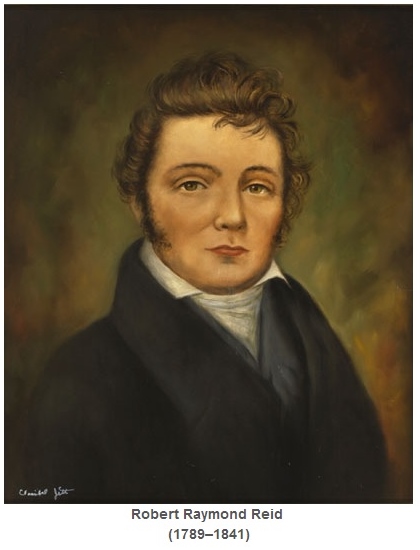
The Honorable Robert Raymond Reid of #Fort-Reid

President Andrew Jackson – namesake of Jacksonville, Florida, in 1832, appointed Judge Robert R. Reid III as U. S. Judge of “East Florida”. In doing so, President Jackson unwittingly charted, as well, the future of a vast but remote wilderness known today as Central Florida.

 
Honorable Robert Raymond Reid III

Florida was still a Territory of the United States at the time, and “East Florida” defined all land east of the Apalachicola River near Tallahassee. “West Florida” was the Panhandle west of the river. The new appointee, a prominent Augusta, Georgia lawyer, relocated to St. Augustine the same year, bringing with him a son, Robert R. Reid IV, and two married daughters. The judge was at the time a Widower.

Judge Robert R. Reid III, on December 2, 1839, became Florida’s 4th Territorial Governor. The Second Seminole Indian War was in its third year when Reid became governor - a war that was not going well, and so Reid went before the State Legislature and asked lawmakers to untie the Army’s hands. Too many restrictions, argued the Governor, were preventing the military from getting the job done.

The unpopular Indian war was still underway when Governor Reid died March 10, 1841 during Tallahassee’s “yellow fever” epidemic. The Army, very appreciative of Governor Reid’s earlier efforts to assist them in the War effort, honored the governor by naming a newly built Army post in central Florida, Fort Reid.

After moving to Florida in 1832, Reid had remarried. His bride, Mary Martha Smith, as a sister of Rebecca, the soon to be wife of Jacksonville merchant and Attorney, Joseph J. Finegan (see Part 5).

One year following Governor’s Reid’s death the Indian War was declared over, Army troops began abandoning central Florida fortresses. A few Veterans however chose to stay, one being Augustus J. Vaughn, who, on the 10th of April 1843, filed a homestead of 160 acres - land upon which stood the abandoned Fort Reid. Vaughn, for the next 51 years, preserved the memory and history of the Army fortress.

Despite being misspelled “Reed” throughout the decades, the true story of Orange County’s Fort Reid, currently a Seminole County landmark – is celebrated today because a War Veteran who served at the fortress made the structure his home after the War.


Fort Reid (Spelled Reed) at lower left on 1845 survey, 1.5 miles south of Lake Monroe

Augustus Vaughn and others attempted to establish a town named in honor of Fortress Reid. In fact, according to Historian William F. Blackman in his 1927 History of Orange County (1927), county business was being conducted at “Fort Reed” during the early 1850s. Then, village of Orlando was founded by Judge Speer (see Part 4). (Fort Reid eventually blended into with the city of Sanford.

But despite being named county seat in 1857, Orlando struggled to survive. Abandoned during the Civil War, by 1867, Judge Benjamin A. Putnam had ordered the land surrounding the county seat to be sold at auction on its own courthouse steps. And it was sold – for $900 - the successful bidder receiving 113 acres – including land on all four sides of the four-acre Orlando village.

The low bidder of Orlando was Robert R. Reid IV of Palatka – the Georgia native who had come to Florida in 1832 with his father - Florida Territorial Governor, Robert R. Reid III.


Partial plat of 1880 Orlando filed by Robert R. Reid
Shaded area center right is the 1857 Village of Orlando
After acquiring this land in 1867, Reid waited until 1880 to sub-divide  

Orlando had been founded at Mile 22 of a military trail used in the Second Seminole Indian War. 

Robert Raymond Reid IV of Palatka, in 1867, came ashore at Lake Monroe, crossed land owned by Attorney Finegan - his deceased father’s brother-in-law – and proceeded south on the trail to a village at Mile 1.5. The village and abandoned fortress – Fort Reid – had been named for his deceased father. Robert Reid IV then continued south on the trail another 20 miles to a deserted village – Orlando – where he rescued a near “Ghost Town”.

Fort Mellon to Fort Gatlin trail, a dirt road, was dubbed First Road to Orlando by this author.
Two years later, Attorney William Mayer Randolph, in 1869, came ashore at Lake Monroe in the very location where Robert Reid IV arrived in 1867 to rescue the village of Orlando. Attorney Finegan still owned nearly 12,000 acres of the southern lakeshore. Attorney Mitchell by that time owned 8,133 acres six miles south on the trail at Lake Jesup. Orlando, at Mile 22, was still a struggling county seat. Its log courthouse had been set ablaze a year prior.

As a remote as Orlando was in 1869 – the trail continued south for another five miles to Fort Gatlin, site of the acreage Attorney Randolph purchased before finding his way to this remote wilderness. Attorney Baker still owned 40 acres on Lake Gatlin, adjacent to Randolph’s newly acquired property, and bordering too land owned by Surveyor Benjamin F. Whitner.

Cowboys & Lawyers continue next Friday, with Attorney William Mayer Randolph of New Orleans.
A mile west of Fort Gatlin, Pine Castle Pioneer Days is February 22 & 23, 2020. FREE this year.


(1) is the location of 1838 Fort Gatlin; (2) is the location of Pine Castle Pioneer Days 2020, cypress Grove Park on Holden Avenue - AND ADMISSION IS FREE THIS YEAR! 

Stop by my booth - near the history tent - and say hello. You can also pick up signed copies of my books - including SEVEN HONORABLE FLORIDIANS, new this year!

Plan to attend my 1 PM Pioneer Days presentation February 22, 2020
A TRIBUTE TO 150 YEARS OF ORANGE COUNTY EDUCATORS
(Approximately 45 minutes in length at The History Tent


COWBOYS & LAWYERS - INSPIRED BY:

Chapter 6: Cowboys & Lawyers, Will Wallace Harney: Orlando’s First Renaissance Man, by Richard Lee Cronin, and published by Pine Castle Historical Society: “Author Cronin sets the stage for his Harney biography with little known facts about pioneer Florida, where he corrects history and then expands it 100 fold!”

And; Central Florida research of Richard Lee Cronin and his books: First Road to Orlando; Beyond Gatlin, A History of South Orange County; CitrusLAND: Curse of Florida’s Paradise; Orlando Lakes: Homesteaders & Namesakes; The Rutland Mule Matter; CitrusLAND: Ghost Towns & Phantom Trains.

VISIT CroninBooks.COM booth at Pine Castle Pioneer Days, February 22 & 23, 2019.

Books also available at Winter Garden Heritage Foundation Museum and Amazon.com


Thursday, January 30, 2020

Cowboys & Lawyers: Part 5 - Joseph J. Finegan


Cowboys & Lawyers: Part 5
Central Florida Attorneys of the 19th Century

A series inspired by Pine Castle Historical Society’s book

Will Wallace Harney: Orlando’s First Renaissance Man

By Richard Lee Cronin

The Honorable Joseph J. Finegan of #Rutledge

Orange County had choice oceanfront property the day Joseph Finegan, merchant and lawyer from Jacksonville, Florida, first acquired his 20,000 remote wilderness acres alongside Lakes Monroe and Jesup. Finegan’s May 17, 1851 deed, reflecting transfer of the Moses Elias Levy Spanish Land Grant to Joseph J. Finegan, was recorded at Orange County by then Clerk of Court, and Mellonville town founder, Henry A. Crane.


Honorable Joseph J. Finegan (1814-1885)

Fewer than 600 men, women, and children lived in all of Orange County at the time of Finegan’s purchase, and the number of children far outnumbered their parents. Half of the population lived north of Finegan’s 20,000 acres, north of Lake Monroe and east of the St. Johns River. The 250 plus citizens living in that part of 1850 Orange County would become residents in 1854 of a new Volusia County.

Orange County of 1850 had only a half-dozen post offices, including Enterprise on the north shore of Lake Monroe, New Smyrna on the Atlantic coast, and a town called Volusia on the St. Johns River. These three post offices would become Volusia County post offices in 1854.

Few settlers had yet to claim government homesteads of 160 acres anywhere in Orange County. Homestead land could be had for next to nothing! But still, in the wilderness south of Lake Monroe, where fewer than 250 courageous soles lived and received mail at one of only two post offices, Mellonville or Jernigan, Attorney Joseph J. Finegan went ahead and acquired 20,000 acres for $7,250.00, translating to a tad over $0.36 per acre.

A lawyer, cotton planter, sawmill owner, and merchant, it is uncertain what Finegan had in mind for the Moses E. Levy Grant. He may have been interested in the timber, for soon after his land purchase, railroad building was added to his extensive resume. He contracted with David Yulee, son of Moses E. Levy, to build the Sea to Sea Railroad from a deep-water port at New Fernandina, southwest to Cedar Key, on the Gulf of Mexico. Completing Yulee’s railroad was to occupy Finegan throughout the 1850s.

Finegan moved from Jacksonville to New Fernandina in Nassau County to build the railroad. Construction began in 1853, with Cedar Key being reached on March 1, 1861, one month before the Confederate Army attacked Fort Sumter in Charleston Harbor. Volusia County had been formed in 1854 largely from north Orange County while Finegan had been at work in North Florida.


The Railroad Joseph J. Finegan built, 1860 Fernandina, Nassau County

The proposed Mellonville to Tampa Railroad of which Finegan was involved was very similar to the Sea-to-Sea Railroad completed by Finegan in 1861.


And while Attorney Finegan built the Sea-to Sea Railroad in North Florida, the wilderness of Central Florida began to show a few signs of evolving. And Finegan’s undeveloped 20,000 acres on Lakes Monroe and Jesup were at that the very epicenter of that evolution. Of particular importance was the first Orange County commercial citrus grove, farmed contiguous to Attorney Finegan’s property, as the grove was beginning to come into its own throughout the 1850s.

Attorney James G. Speer (Part 4) also arrived in 1854, and by 1857, three sparsely developed areas: Apopka; Fort Reid; and Orlando, each competed for the coveted title of Orange County’s seat of government. Orlando of course won. Then, in 1859, Attorney Finegan sold a portion of his land to Attorney Daniel R. Mitchell of Rome, Georgia (Part 1). Mitchell acquired the 8,133 acres at Lake Jesup. 

And while property owners were positioning themselves for future development, the wife of Attorney Speer (Part 4) had, by 1860, accumulated 1,700 Orange County acres, most in the vicinity of Lake Apopka, although several strategic parcels were along the First Road to Orlando as well.

One might wonder if the legal professionals of the mid-19th century knew something about Orange County’s future that others did not? WHAT did Finegan know? Or perhaps a more appropriate question would be, WHO did Finegan know?

Civil War and a protracted Reconstruction Period halted plans for central Florida. So, not until 1869 did the legal professionals have an opportunity to return to earlier plans for this region. Attorney Joseph Finegan, known in the Post-War era as General Finegan, was broke. He sold his 12,000 remaining acres to Henry F. Sanford - but Finegan did not give up on Orange County. He bought land south of Fort Reid, acreage tucked between his two original Moses Levy parcels, and went to work once again on trying to build a railroad to Tampa Bay.


Rutledge, Orange County, Florida, 2 miles south of Fort Reid

Finegan also established a town he called Rutledge. Named for his deceased son, and a ghost town today, this city, for at least for a brief time, was a stop on the Sanford and Indian River Railroad.

Finegan’s Orange Grove at Rutledge was a mile or so south of Fort Reid, a Seminole Indian fortress dating to 1841-1842, a fort that had been named for Joseph Finegan’s brother-in-law.

Mere coincidence? I think not!

Next Friday, Cowboys & Lawyers continues with the Honorable Robert Raymond Reid.

Further Reading by this author:

First Road to Orlando
CitrusLAND: Curse of Florida's Paradise
Will Wallace Harney: Orlando's First Renaissance Man


COWBOYS & LAWYERS - INSPIRED BY:

Chapter 6: Cowboys & Lawyers, Will Wallace Harney: Orlando’s First Renaissance Man, by Richard Lee Cronin, and published by Pine Castle Historical Society: “Author Cronin sets the stage for his Harney biography with little known facts about pioneer Florida, where he corrects history and then expands it 100 fold!


And; Central Florida research of Richard Lee Cronin and his books: First Road to Orlando; Beyond Gatlin, A History of South Orange County; CitrusLAND: Curse of Florida’s Paradise; Orlando Lakes: Homesteaders & Namesakes; The Rutland Mule Matter; CitrusLAND: Ghost Towns & Phantom Trains.

VISIT CroninBooks.COM booth at Pine Castle Pioneer Days, February 22 & 23, 2019.

Books also available at Winter Garden Heritage Foundation Museum and Amazon.com
     

Thursday, January 23, 2020

Cowboys & Lawyers - Part 4 - Judge Games G. Speer


Cowboys & Lawyers: Part 4
Central Florida Attorneys of the 19th Century

A series inspired by Pine Castle Historical Society’s book,

Will Wallace Harney: Orlando’s First Renaissance Man

By Richard Lee Cronin

A SINCERE THANK YOU to Seminole County’s Inns of Court, an organization of dedicated Attorneys & Judges, for inviting me to talk at their January 22, 2020 gathering. I truly enjoyed discussing the unique role legal professionals have played in the 19th century development and founding of central Florida’s 19th Century Citrus-Belt.


The Honorable James Gamble Speer of #Oakland

For those familiar with modern day central Florida, it is a challenge to imagine a journey of 25 miles on horseback - from Lake Monroe south to Lake Conway – during which time you see not more than a half dozen hardy cowboys and perhaps a log cabin or two. Such however was the first 1854 journey made by Attorney and Judge, James Gamble Speer.   


Honorable James Gamble Speers (1820-1893)
Early Settlers of Orange County by C. E. Howard (1915)

One could argue a village would have been established on Lake Monroe’s south shore eventually anyway, but the first want-to-be town that did take hold was Mellonville, birthplace of today’s Orlando to Tampa I-4 “corridor”. Present day county seats Sanford (a mile west of Mellonville); Orlando; Kissimmee; and even Lakeland; are not where they are by accident. Each are there because of an aggressive plan first hatched nearly 170 seventy years ago. And attorneys and Judges, each traveling central Florida’s wilderness via horseback, aka “traveling a circuit”, were among the visionaries of a string of settlements to link Lake Monroe with the Gulf of Mexico.

More than handlers of legalities, a plethora of pioneers holding law degrees actively engaged in attempting to transform 3,000 square miles of rugged cattle country into settlements. Literally dozens of cowboy-lawyers were attracted to central Florida during the second half of the 1800s, and without question, the best-known of all was the Honorable James Gamble Speer.

His long-life span earned Speer a headline in the history of a developing central Florida. Twice a husband and eight times a father, the legacy of James G. Speer lived on in central Florida thanks in large part to his numerous descendants keeping alive the man’s role in developing the region.

James G. Speer was also the brother-in-law, through his first marriage, of “Benjamin F. Caldwell of Talladega”, the land donor for Orange County’s courthouse at “Orlando”.

Historians have long credited James G. Speer and Benjamin F. Caldwell as founders of Orlando, although not much was ever known of the latter. Legal records at the courthouse establish that Caldwell gave four acres in 1857 for a courthouse location. But as my First Road to Orlando established, there was an intriguing twist long-missing from the story of Orlando’s founding. Attorney James G. Speer and Estate-Administrator Caldwell were related through James Speer’s first wife, Isaphoenia C. (Ellington) Speer.


Isaphoenia C. (Ellington) Speer (1824-1867)
Photo courtesy Winter Garden Heritage Foundation

Isaphoenia was a lineal descendant of several legendary men named Orlando, including Orlando Jones (1681-1719) of Colonial Williamsburg, a prominent Attorney. Towns were seldom named using a person’s first name!


Orlando Jones (1681-1719) House at Historic Williamsburg, VA
Recreated from the architectural plan for the Jones house and law practice


The earliest years of the James Speer family at central Florida are unclear. Unlike most pioneers of the 19th century, Attorney James G. Speer never applied for a homestead. Private James Speer enlisted at Fort Gatlin in Orange County’s 1856 militia, but there is no record of land purchases until 1858, and even then, land acquisitions were deeded to the wife, Isaphoenia C. Speer.

Isaphoena accumulated large parcels along the shore of Lake Apopka - where Winter Garden and Oakland are today. James G. Speer and Mary E. (Jackson), his second wife, founded the town of Oakland on this property three (3) decades later, in 1886.

In 1854, the Speer’s arrived at the ghost town of Mellonville. Their first Orange County steps were taken on private property. Now part of Seminole County, the homestead upon Speer and family crossed had been established as Mellonville in 1843 - and abandoned in 1850 after the Moses E. Levy Spanish Land Grant was decreed “official” by the U. S. Supreme Court. After the 1850 decree, amended surveys discovered the old Mellonville pier to be part of the Levy Grant. Hence, the homestead entry was vided.  But when Speer arrived in central Florida, Moses Levy no longer owned the property. He had sold all 20,000 acres.

Attorney Joseph J. Finegan of Fernandina in Nassau county was buyer, but Finegan had done nothing to develop the land during the 1850s.

Four years before Speer arrived at Mellonville, the Orange County census of 1850 found only 250 residents south of Lake Monroe. Another 250 residents lived north of Mellonville, across Lake Monroe, land that became part of a new Volusia county the same year James G. Speer and family arrived at Mellonville. But change was very much in the air in 1854.

Volusia County was awakening in 1854. Enterprise of Orange County became Enterprise of Volusia County, and new arriving settlers were taking notice of that vast wilderness.

Ideas were also being hatched though for land south of Lake Monroe. Two miles inland, at the village of Fort Reid, lived Attorney James G. Speer’s cousin, Dr. Algernon S. Speer. Algernon was then married to his second wife, Julia Hart, daughter of Isaiah David Hart, the founder of Jacksonville, Florida’s gate city. Hart, father of two attorneys, both active in State government, had big plans for Fort Reid.

Algernon Speer was himself a member in 1854 of Florida’s State House of Representatives. And it seemed the perfect time to appoint an official county seat for Orange County. Fort Reid, a mile east of present-day Sanford, was considered the natural “contender” – and most even considered it a done deal. Isaiah Hart had purchased a large chunk of land at Fort Reid, and held all the cards necessary, so it seemed, to make Fort Reid the hub of Orange County.

But by year end 1856, newcomer James G. Speer, a resident Attorney of less than two years, had somehow pulled off the impossible. Not even a town yet - Orlando, smack dab in the middle of nowhere, somehow won the coveted title of Orange County seat.

James G. Speer had not performed his magic alone. How he turned a cow pasture into the ‘Town of Orlando’ however is a story that must wait until later in this series, for to appreciate the story of Orlando, there are others, many of whom were Attorneys and Judges, who were “behind the scenes” players.

Next Friday, Cowboys & Lawyers with introduce Attorney Joseph J. Finegan.

For more on the Speer family of central Florida
CitrusLAND: Curse of Florida's Paradise
CitrusLAND: Ghost Towns & Phantom Trains
First Road to Orlando 

COWBOYS & LAWYERS - INSPIRED BY:

Chapter 6: Cowboys & Lawyers, Will Wallace Harney: Orlando’s First Renaissance Man, by Richard Lee Cronin, and published by Pine Castle Historical Society: “Author Cronin sets the stage for his Harney biography with little known facts about pioneer Florida, where he corrects history and then expands it 100 fold!”


And; Central Florida research of Richard Lee Cronin and his books: First Road to Orlando; Beyond Gatlin, A History of South Orange County; CitrusLAND: Curse of Florida’s Paradise; Orlando Lakes: Homesteaders & Namesakes; The Rutland Mule Matter; CitrusLAND: Ghost Towns & Phantom Trains.

VISIT CroninBooks.COM booth at Pine Castle Pioneer Days, February 22 & 23, 2019.

Also, CroninBooks will have a booth at the Osceola Spring Festival February 29, 2020.

Books also available at Winter Garden Heritage Foundation Museum and Amazon.com